Love this? Save it for later!
Share the inspiration with your friends
“I was never the type to fuss over complicated meals,” my friend Jenna confessed one breezy Saturday afternoon as we both stared at the jumble of asparagus, cherry tomatoes, and pasta sprawled across her kitchen counter. It was a mess, honestly—pots everywhere, garlic skins littering the floor, and a sauce that looked more like a science experiment gone rogue. But somewhere amid the chaos, she tossed everything into a single pan, and that’s when magic happened.
That day, Jenna shared her Easy One-Pan Spring Pasta Primavera with Asparagus recipe, a dish born from a hurried weeknight scramble and a stubborn craving for something light and vibrant. The sizzle of asparagus hitting the hot pan, the gentle simmer of pasta soaking up the garlicky broth—it was the kind of dinner that felt both effortless and special. You know that feeling when a recipe surprises you? Like it was made just for that moment? That’s exactly what this pasta did.
I remember the cracked ceramic bowl Jenna used to toss the salad—she said it was a hand-me-down from a quirky thrift shop—and how the smell of fresh basil filled the room, pulling us closer to the table. Honestly, it wasn’t perfect; she forgot to grate enough Parmesan, and the pasta stuck a little in the pan, but it was delicious all the same. Maybe you’ve been there, craving a quick meal that doesn’t skimp on flavor or charm. This one-pan primavera has stuck with me ever since—simple, fresh, and downright satisfying.
Why You’ll Love This Recipe
After countless trials in my own kitchen and many shared plates with friends, I can say this Easy One-Pan Spring Pasta Primavera with Asparagus is a real winner. It’s not just another pasta dish—it’s a weeknight hero that brings springtime to your plate with minimal fuss and maximum taste.
- Quick & Easy: Ready in under 30 minutes, making it perfect for busy evenings or last-minute dinners.
- Simple Ingredients: Uses pantry staples and seasonal asparagus that you can find fresh or even frozen.
- Perfect for Spring: Captures the bright, fresh flavors of the season, ideal for lighter, healthier meals.
- Crowd-Pleaser: Kids and adults alike love the balance of tender veggies and flavorful pasta.
- Unbelievably Delicious: The one-pan method lets the pasta soak up all the garlicky, lemony goodness, creating a beautiful harmony of texture and taste.
This isn’t your average primavera. The secret lies in cooking everything together in one pan, which means less cleanup and more time to enjoy your meal. Plus, the asparagus gets just the right amount of crisp-tender bite, and the bright lemon zest lifts the whole dish into fresh territory. I mean, who doesn’t want a pasta that feels like a spring picnic but comes together faster than ordering takeout?
What Ingredients You Will Need
This Easy One-Pan Spring Pasta Primavera with Asparagus recipe relies on simple, wholesome ingredients to bring vibrant flavors and a satisfying texture without any hassle. Most of these are pantry staples, while the asparagus adds that fresh, seasonal touch that really makes the dish pop.
- Olive oil (extra virgin, about 3 tablespoons) – for richness and a silky base flavor
- Garlic cloves (3 large, minced) – adds aromatic depth
- Yellow onion (1 small, finely chopped) – for sweetness and balance
- Fresh asparagus (1 bunch, trimmed and cut into 2-inch pieces) – the star of spring
- Cherry tomatoes (1 cup, halved) – bursts of juicy sweetness
- Uncooked spaghetti (8 ounces / 225 grams) – classic pasta that cooks right in the pan
- Vegetable broth (3 1/2 cups / 830 ml) – helps cook the pasta and infuses flavor (I recommend using low-sodium for control)
- Lemon zest (from 1 medium lemon) – adds bright freshness
- Fresh basil leaves (about 1/4 cup, chopped) – for an herby finish
- Grated Parmesan cheese (1/2 cup) – optional but highly recommended for creaminess
- Salt and freshly ground black pepper – to taste
Substitution tips: Use gluten-free pasta if needed, and swap vegetable broth for chicken broth if you prefer a richer flavor. Frozen asparagus works well in a pinch but adjust the cooking time slightly. For a vegan version, replace Parmesan with nutritional yeast or a plant-based cheese alternative.
Equipment Needed
- Large deep skillet or sauté pan (preferably 12-inch) – essential for cooking the pasta and veggies together in one pan
- Sharp knife and cutting board – for prepping veggies
- Measuring cups and spoons – for precise broth and ingredient measurements
- Wooden spoon or heatproof spatula – for stirring without scratching your pan
- Grater – to zest the lemon and grate Parmesan
If you don’t have a large skillet, a wide saucepan with a lid can work, but be sure it’s big enough to hold all ingredients comfortably. I’ve also used a cast iron pan for this recipe, which adds a nice even heat, though you have to watch water levels carefully to avoid sticking. For those on a budget, most supermarkets sell affordable non-stick pans that do the job well. Just remember to avoid metal utensils to keep your pan coating intact!
Preparation Method
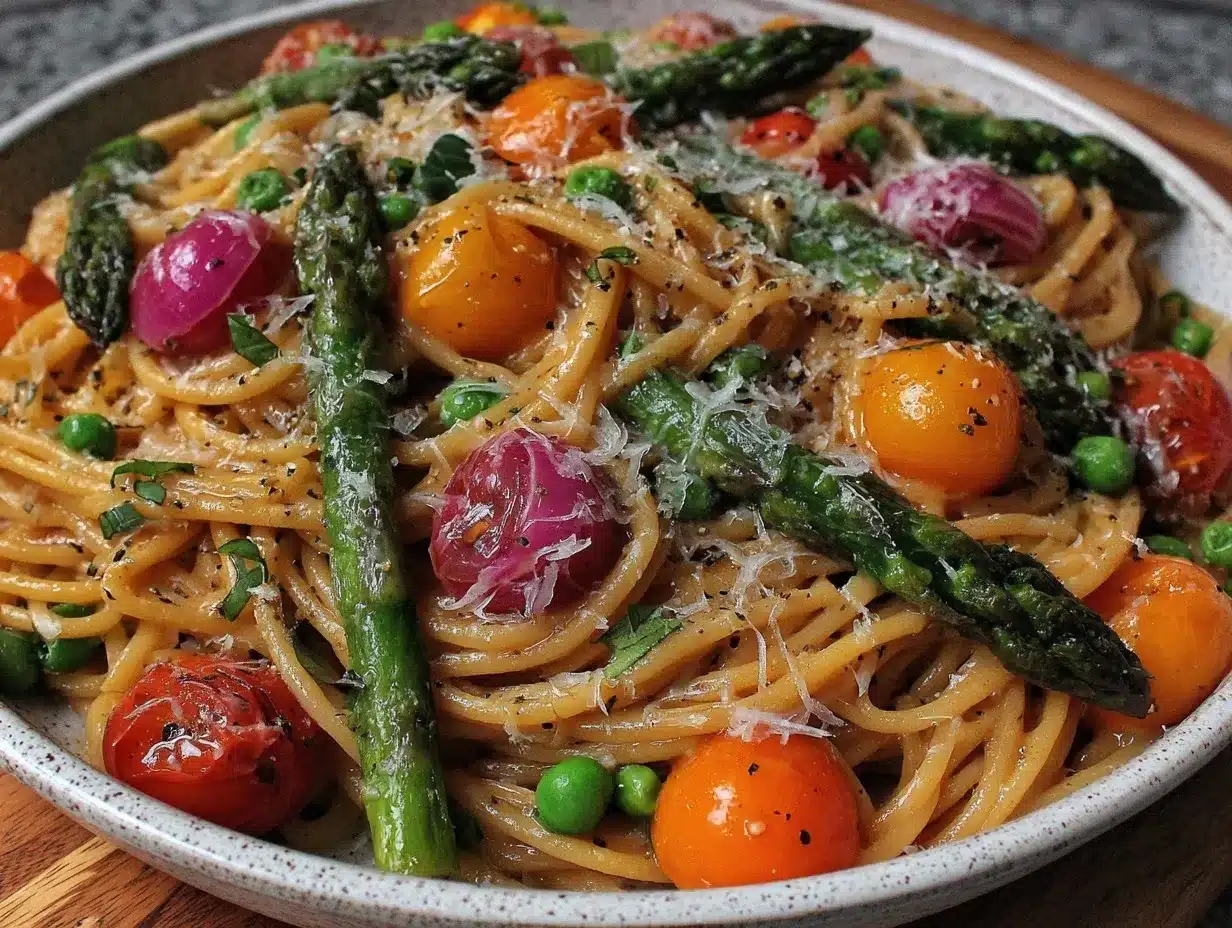
- Heat the olive oil: In your large skillet over medium heat, warm 3 tablespoons of olive oil until shimmering, about 1-2 minutes.
- Sauté the aromatics: Add the minced garlic and chopped onion. Cook for 3-4 minutes, stirring frequently, until the onion becomes translucent and fragrant. Watch carefully so the garlic doesn’t burn—it should smell sweet, not bitter.
- Add asparagus and cherry tomatoes: Toss in the asparagus pieces and cherry tomatoes. Stir and cook for 3-5 minutes until asparagus is bright green and just starting to soften. You want that slight snap, not mushiness.
- Pour in broth and add pasta: Pour 3 1/2 cups (830 ml) of vegetable broth into the pan. Carefully break the uncooked spaghetti in half and add it to the skillet, pressing down gently to submerge it in the broth. Season with salt and pepper to taste.
- Bring to a simmer and cook pasta: Increase heat to medium-high and bring the liquid to a gentle boil. Reduce heat to medium-low and let it simmer uncovered, stirring occasionally to prevent sticking. Cook for about 10-12 minutes, or until the pasta is al dente and most of the liquid has been absorbed. If it looks too dry before pasta is tender, add a splash more broth or water.
- Finish with lemon zest and basil: Once the pasta is cooked, remove from heat. Stir in the fresh lemon zest and chopped basil leaves for a burst of freshness. Taste and adjust seasoning if needed.
- Add Parmesan cheese: If using, sprinkle the grated Parmesan over the pasta and gently fold it in until melted and creamy. This step adds a lovely richness that balances the bright veggies.
- Serve immediately: Scoop into bowls and garnish with extra basil or Parmesan if desired. Enjoy warm!
Tip: Stirring occasionally during cooking is key to prevent the pasta from sticking and to evenly cook the asparagus. If you notice the broth evaporating too quickly, add a bit more liquid—this recipe is forgiving but benefits from a watchful eye. When you’re done, your pan might have a few browned bits stuck to the bottom; they’re full of flavor and worth scraping up while serving.
Cooking Tips & Techniques
One-pan pasta dishes are fantastic but they do come with quirks. Here are some tips to make sure your Easy One-Pan Spring Pasta Primavera with Asparagus turns out just right every time.
- Use the right pan size: A large, wide skillet helps the pasta cook evenly. Crowding the pan means uneven cooking and clumpy pasta.
- Breaking the pasta: Breaking spaghetti in half isn’t just to fit the pan—it helps it cook uniformly in the liquid, making stirring easier.
- Don’t rush stirring: Stir gently but regularly. You want the pasta to release starch and thicken the broth, not stick and clump.
- Keep broth handy: Sometimes the pasta absorbs liquid faster than expected. Having extra broth or water nearby saves the day.
- Freshness matters: Use fresh asparagus and basil for the best flavor. Frozen veggies work, but fresh is unbeatable when it’s in season.
- Practice patience: Cooking pasta in broth takes a bit longer than boiling it separately, but the flavor payoff is worth it.
- Personal lesson: I once forgot to add enough broth and ended up with crispy burnt noodles. Not my best moment, but it taught me to watch liquid levels carefully!
Variations & Adaptations
This Easy One-Pan Spring Pasta Primavera with Asparagus is a flexible canvas. Here are some ideas to tweak it to your liking or dietary needs:
- Protein boost: Add cooked chicken strips or sautéed shrimp in the last 2-3 minutes for a heartier meal.
- Vegan version: Skip the Parmesan or replace it with nutritional yeast or vegan cheese for a dairy-free option.
- Seasonal swap: In early summer, swap asparagus for fresh peas or zucchini ribbons for a different fresh twist.
- Spice it up: Add a pinch of red pepper flakes when sautéing the garlic for a gentle heat kick.
- Gluten-free: Use your favorite gluten-free pasta to keep it safe and delicious.
One time, I tried adding sun-dried tomatoes and a splash of white wine to the broth. It was unexpected but totally delightful. Don’t be afraid to make it your own—you might find a new favorite!
Serving & Storage Suggestions
This pasta is best served fresh and warm, right out of the pan. The bright lemon and basil flavors shine most at room temperature or slightly warm, so no need to overheat it.
Pair it with a crisp green salad or a light white wine like Pinot Grigio to complement the fresh veggies. It also works beautifully alongside a crispy garlic chicken if you want to add some protein to the table.
Leftovers keep well in an airtight container in the refrigerator for up to 3 days. When reheating, add a splash of broth or water to loosen the pasta and warm gently on the stove or in the microwave to avoid drying out.
Flavors tend to meld overnight, giving you a slightly softer texture and a deeper, more harmonious taste. Honestly, sometimes the next-day version is just as good as the fresh!
Nutritional Information & Benefits
Per serving (about 1/4 of the recipe), this pasta primavera offers approximately:
| Calories | 320 kcal |
|---|---|
| Protein | 10 g |
| Carbohydrates | 50 g |
| Fat | 8 g |
| Fiber | 5 g |
Asparagus is a fantastic source of vitamins A, C, and K, plus folate and antioxidants. The garlic and onion add immune-boosting compounds, while olive oil provides heart-healthy fats. This dish is naturally low in sugar and can be made gluten-free, dairy-free, or vegan with simple swaps.
From a wellness standpoint, this recipe fits well in a balanced diet and offers a bright, nutrient-rich meal without weighing you down—perfect for springtime when you want something light but satisfying.
Conclusion
If you’re looking for a fresh, flavorful dinner that doesn’t demand hours in the kitchen or a mountain of dishes, this Easy One-Pan Spring Pasta Primavera with Asparagus is your new best friend. It combines simple, seasonal ingredients with a straightforward technique that anyone can master.
Make it your own by adding your favorite veggies or proteins, and don’t shy away from playing with herbs and spices. I love this recipe because it reminds me that good food doesn’t have to be complicated to be memorable. Give it a try, and let me know how you customize your version—I’d love to hear your stories!
Ready to jump in? Grab your skillet, and let’s get cooking!
Frequently Asked Questions
Can I use other types of pasta for this recipe?
Absolutely! While spaghetti works great, you can use linguine, fettuccine, or even penne. Just adjust cooking time as needed.
Is it necessary to break the spaghetti in half?
Breaking the spaghetti helps it fit in the pan and cook evenly in the broth, but if you have a very large pan, you might leave it whole.
Can I prepare this dish ahead of time?
You can prep the veggies in advance, but I recommend cooking the pasta fresh for the best texture and flavor.
What can I substitute for Parmesan cheese?
For a dairy-free option, nutritional yeast or vegan cheese alternatives work well to add a cheesy flavor.
How do I keep the pasta from sticking to the pan?
Stir regularly and keep an eye on the broth levels. Adding a little extra liquid if it gets too dry helps prevent sticking.
Pin This Recipe!
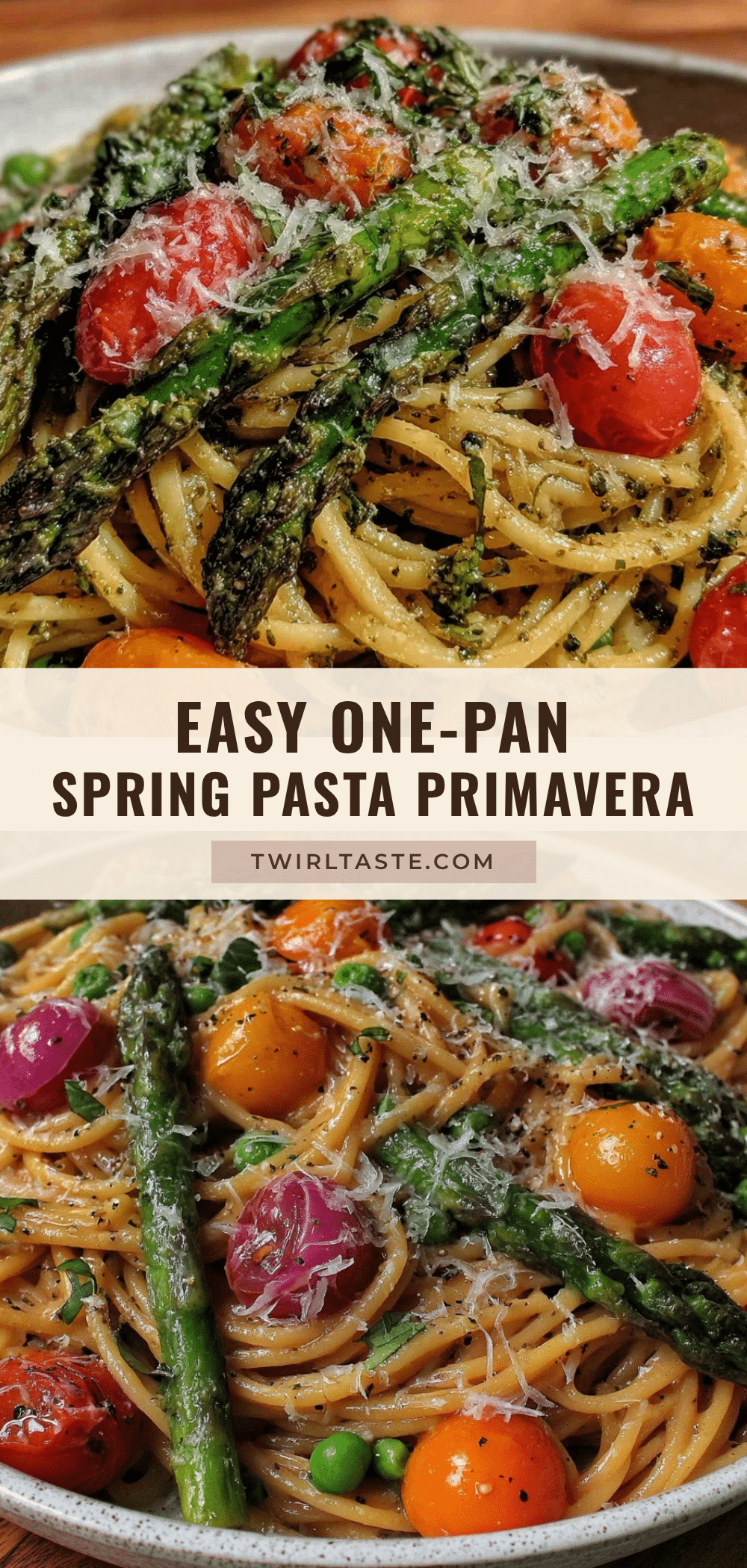
Easy One-Pan Spring Pasta Primavera with Asparagus
A quick and easy one-pan pasta dish featuring fresh asparagus, cherry tomatoes, and a garlicky lemon broth, perfect for a light and vibrant spring dinner.
- Prep Time: 10 minutes
- Cook Time: 20 minutes
- Total Time: 30 minutes
- Yield: 4 servings 1x
- Category: Main Course
- Cuisine: Italian
Ingredients
- 3 tablespoons extra virgin olive oil
- 3 large garlic cloves, minced
- 1 small yellow onion, finely chopped
- 1 bunch fresh asparagus, trimmed and cut into 2-inch pieces
- 1 cup cherry tomatoes, halved
- 8 ounces (225 grams) uncooked spaghetti
- 3 1/2 cups (830 ml) vegetable broth (low-sodium recommended)
- Zest of 1 medium lemon
- 1/4 cup fresh basil leaves, chopped
- 1/2 cup grated Parmesan cheese (optional)
- Salt and freshly ground black pepper to taste
Instructions
- Heat 3 tablespoons of olive oil in a large skillet over medium heat until shimmering, about 1-2 minutes.
- Add minced garlic and chopped onion; cook for 3-4 minutes, stirring frequently, until onion is translucent and fragrant.
- Add asparagus pieces and cherry tomatoes; stir and cook for 3-5 minutes until asparagus is bright green and slightly tender.
- Pour in 3 1/2 cups vegetable broth. Break spaghetti in half and add to skillet, pressing down to submerge in broth. Season with salt and pepper.
- Bring to a gentle boil over medium-high heat, then reduce to medium-low and simmer uncovered, stirring occasionally, for 10-12 minutes until pasta is al dente and most liquid is absorbed. Add more broth or water if needed.
- Remove from heat and stir in lemon zest and chopped basil leaves. Adjust seasoning as needed.
- If using, sprinkle grated Parmesan over pasta and fold in until melted and creamy.
- Serve immediately, garnished with extra basil or Parmesan if desired.
Notes
Stir occasionally during cooking to prevent pasta from sticking. Add extra broth or water if the liquid evaporates too quickly. Use fresh asparagus and basil for best flavor. For vegan version, replace Parmesan with nutritional yeast or plant-based cheese. Gluten-free pasta can be used as a substitute.
Nutrition
- Serving Size: About 1/4 of the rec
- Calories: 320
- Sugar: 5
- Sodium: 400
- Fat: 8
- Saturated Fat: 1
- Carbohydrates: 50
- Fiber: 5
- Protein: 10
Keywords: one-pan pasta, primavera, asparagus, spring recipe, easy dinner, quick pasta, vegetarian pasta, healthy pasta