Love this? Save it for later!
Share the inspiration with your friends
“You won’t believe what I found at the farmers market last Saturday,” my friend Jamie said as she pulled me toward a stall overflowing with the brightest, freshest vegetables. Honestly, the way those zucchini, cherry tomatoes, and snap peas popped against the wooden crates was almost hypnotic. I wasn’t planning to cook anything fancy that day—just a quick grab-and-go meal. But then, Jamie started talking about this creamy garlic parmesan pasta primavera she whipped up last week, using whatever veggies were in season.
It wasn’t just the usual pasta dish—she told me about how the sauce was silky and rich without feeling heavy, and how the vegetables stayed crisp and vibrant, giving every bite a delightful crunch. I was skeptical (you know, the usual—creamy pasta often ends up feeling too heavy or bland), but Jamie insisted it was different. So, I went home inspired, rummaged through my fridge, and gave it a shot. The result? Well, let’s just say my kitchen looked like a bit of a tornado hit it, but the flavors were absolutely worth the mess.
That day, I realized how this recipe isn’t just about throwing pasta and veggies together. It’s about letting the garlic and parmesan sing, keeping the fresh veggies front and center, and creating a dish that feels both indulgent and light. Maybe you’ve been there—wanting something comforting yet fresh, simple but special. This creamy garlic parmesan pasta primavera with fresh veggies quickly became one of those recipes I keep coming back to, especially as spring turns into summer and the farmers market fills up with goodies. Let me tell you, it’s one of those meals that makes you close your eyes after the first bite—comfort food that doesn’t weigh you down.”
Why You’ll Love This Creamy Garlic Parmesan Pasta Primavera Recipe
After trying countless pasta primavera recipes, I can honestly say this one stands out for a few solid reasons. It’s not just a run-of-the-mill creamy pasta—there’s a balance here that’s hard to find, and I’ve tested this recipe multiple times to get it just right.
- Quick & Easy: Ready in about 30 minutes, it’s perfect for those busy weeknights when you want something fast but satisfying.
- Simple Ingredients: No fancy, hard-to-find items. You likely have garlic, parmesan, pasta, and some fresh veggies on hand.
- Perfect for Spring and Summer: Showcases fresh, seasonal vegetables that bring brightness and texture to the creamy sauce.
- Crowd-Pleaser: Whether it’s a family dinner or a casual get-together, this recipe always gets compliments—even from the vegetable skeptics.
- Unbelievably Delicious: The sauce is rich but light, thanks to the use of cream and parmesan, while the garlic adds just the right punch.
What makes this recipe different is the technique of cooking the veggies quickly so they stay crisp, paired with a garlic-infused cream sauce that’s velvety without being heavy. I also add a splash of pasta water to the sauce for that silky finish. Honestly, this isn’t just another creamy pasta primavera—it’s my best version, perfected through trial, error, and a few happy accidents (including almost burning the garlic once!).
This is the kind of recipe that turns simple ingredients into a comforting plate that feels like a warm hug but with a fresh twist. Give it a try—you might find yourself making it again sooner than you think.
What Ingredients You Will Need
This recipe uses simple, wholesome ingredients to deliver bold flavor and satisfying texture without the fuss. Most are pantry staples or fresh veggies you can grab at your local market. Feel free to swap in whatever seasonal vegetables you love.
- Pasta: 12 ounces (340 grams) fettuccine or linguine (I recommend Barilla for consistent texture)
- Fresh Vegetables:
- 1 cup zucchini, sliced into half-moons
- 1 cup yellow squash, sliced similarly
- 1 cup cherry tomatoes, halved
- ½ cup snap peas, trimmed
- ½ cup thinly sliced red bell pepper (optional, for sweetness and color)
- Garlic: 4 cloves, minced (adds that signature punch)
- Butter: 3 tablespoons unsalted, softened (for richness)
- Heavy Cream: 1 cup (240 ml) (use half-and-half for a lighter option)
- Parmesan Cheese: 1 cup freshly grated (look for Parmigiano-Reggiano for best flavor)
- Olive Oil: 2 tablespoons (for sautéing veggies; extra virgin recommended)
- Lemon Juice: 1 tablespoon fresh (brightens the sauce)
- Salt & Pepper: To taste
- Fresh Basil: A handful, chopped (optional, for garnish and fresh herbal note)
- Pasta Water: Reserved ½ cup (120 ml) to loosen the sauce as needed
Substitution tip: Use gluten-free pasta to make this recipe gluten-free, or swap heavy cream for coconut cream for a dairy-free version (though the flavor will shift slightly).
Equipment Needed
- Large pot for boiling pasta
- Large skillet or sauté pan (preferably non-stick or stainless steel)
- Colander or strainer for draining pasta
- Wooden spoon or silicone spatula for stirring
- Grater for fresh parmesan cheese (a microplane works great)
- Measuring cups and spoons
- Knife and cutting board for prepping veggies
If you don’t have a microplane, a box grater’s fine for the parmesan. I used a heavy-bottomed skillet to keep the heat even while sautéing the veggies. If you’re on a budget, a regular non-stick pan works just as well—just be careful not to scorch the garlic.
Preparation Method
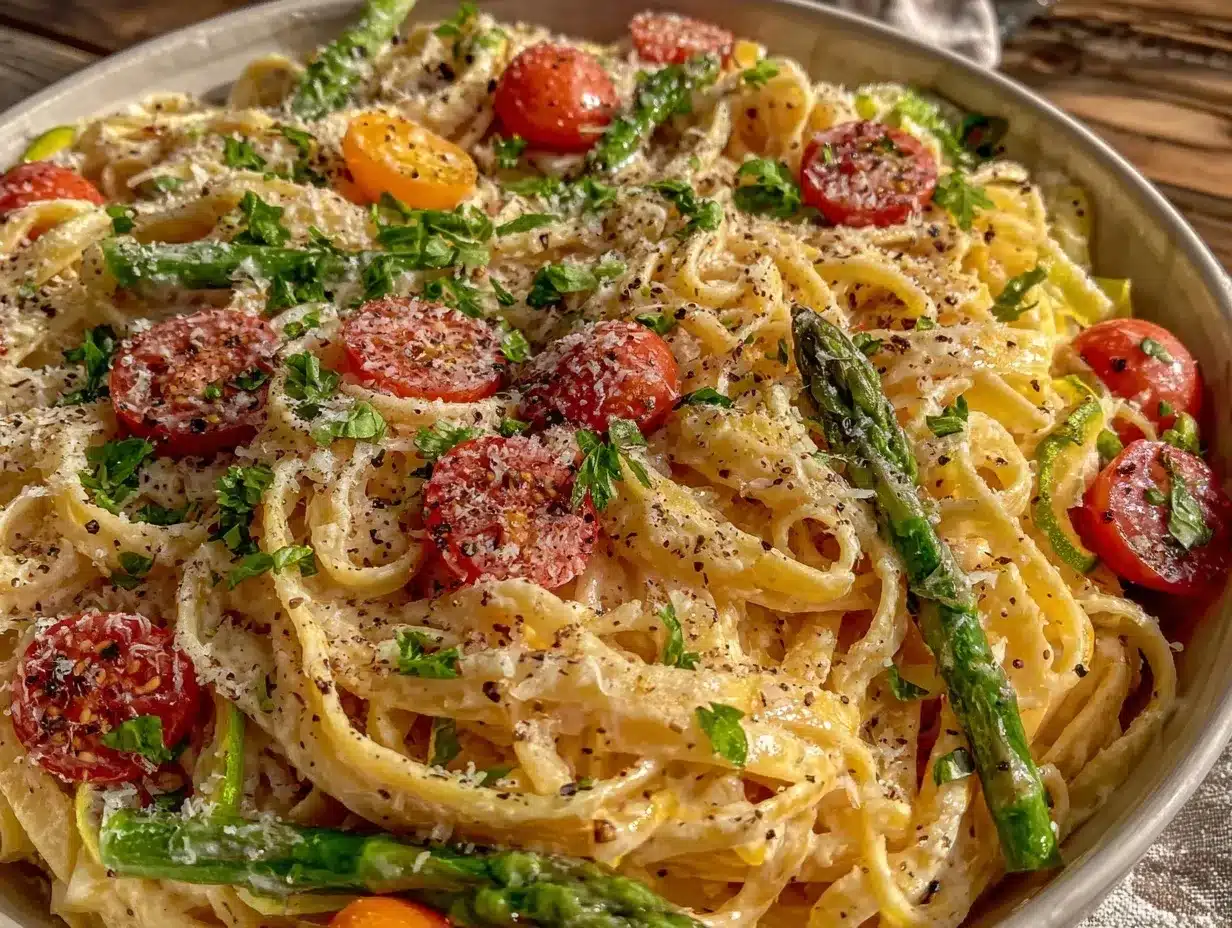
- Cook the Pasta: Bring a large pot of salted water to a boil. Add 12 ounces (340 g) of pasta and cook according to package instructions until al dente, usually about 8-10 minutes. Reserve ½ cup (120 ml) of pasta water before draining. Set pasta aside.
- Prepare the Vegetables: While pasta cooks, wash and slice your veggies: zucchini and yellow squash into thin half-moons, cherry tomatoes halved, snap peas trimmed, and bell pepper thinly sliced. This prep should take about 10 minutes.
- Sauté the Veggies: Heat 2 tablespoons olive oil in a large skillet over medium heat. Add the minced garlic and cook for about 30 seconds until fragrant but not browned (burnt garlic tastes bitter, so watch closely!). Add zucchini, yellow squash, snap peas, and bell pepper. Sauté for 4-5 minutes until veggies are tender-crisp. Toss in cherry tomatoes last and cook for another 1-2 minutes just to warm them through.
- Make the Sauce: Reduce heat to low and add 3 tablespoons unsalted butter to the skillet. Once melted, pour in 1 cup (240 ml) heavy cream and stir to combine. Allow mixture to simmer gently for 2-3 minutes, stirring occasionally. Then, gradually add 1 cup freshly grated parmesan cheese, stirring until melted and smooth. If sauce feels too thick, add reserved pasta water a little at a time until desired consistency is reached.
- Combine Pasta and Sauce: Add the drained pasta directly into the skillet with the sauce and veggies. Toss well to coat everything evenly. Stir in 1 tablespoon fresh lemon juice and season with salt and freshly ground black pepper to taste. Cook together for 1-2 minutes so flavors meld.
- Garnish and Serve: Remove from heat and sprinkle with chopped fresh basil if using. Serve immediately while warm and creamy.
Pro tip: If the sauce thickens too quickly, a splash of reserved pasta water can loosen it up beautifully without diluting flavor. Also, try not to overcook the veggies—they should still have a slight crunch for the best texture contrast.
Cooking Tips & Techniques
One thing I learned the hard way is that garlic is a delicate ingredient. Cooking it too long or on too high heat can make it bitter, which ruins the sauce’s smooth flavor. I always add garlic first on medium heat just until fragrant, then quickly move on to the veggies.
Keeping the vegetables crisp is key for this pasta primavera. I found that sautéing them in batches if your pan is crowded helps them cook evenly without steaming. Plus, adding the cherry tomatoes at the end preserves their juiciness and vibrant color.
Using freshly grated parmesan cheese makes a huge difference compared to pre-shredded bags. The fresh cheese melts more smoothly, giving the sauce a silky texture. Also, don’t skip reserving pasta water—it’s a classic trick that makes your sauce cling beautifully to the noodles.
Don’t rush the sauce simmering step. Letting the cream and butter gently heat together before adding cheese helps prevent clumping and creates that luscious mouthfeel. Last but not least, toss everything together off the heat to avoid curdling or breaking the sauce.
Variations & Adaptations
This creamy garlic parmesan pasta primavera is wonderfully adaptable to whatever you have on hand or your dietary needs.
- Vegetarian or Vegan: Use dairy-free cream and vegan parmesan substitutes. Nutritional yeast adds a cheesy flavor, and olive oil or vegan butter replaces regular butter.
- Seasonal Veggies: Swap in asparagus, peas, or baby spinach in spring; heirloom tomatoes and corn in summer. Roasted butternut squash or mushrooms work well in fall and winter.
- Protein Boost: Add grilled chicken, sautéed shrimp, or crispy tofu cubes for a heartier meal.
- Gluten-Free: Use gluten-free pasta, such as brown rice or chickpea-based noodles, to keep it gluten-free without sacrificing texture.
- Spicy Twist: Toss in a pinch of red pepper flakes or a dash of hot sauce to add some heat.
Once, I swapped out the zucchini for roasted eggplant and added a sprinkle of toasted pine nuts. It was a happy accident that brought a smoky depth I hadn’t expected but absolutely loved.
Serving & Storage Suggestions
This pasta primavera is best served hot and fresh—the creamy sauce tends to thicken as it cools. I like to plate it with a sprinkle of fresh basil or parsley for color and a fresh note. A crisp green salad or a light white wine pairs beautifully.
Leftovers can be stored in an airtight container in the fridge for up to 3 days. When reheating, add a splash of cream or milk and warm gently on the stove to bring back the sauce’s creaminess. Avoid the microwave if possible, as it can separate the sauce.
Flavors actually deepen after a day, so if you have time, letting it rest overnight in the fridge is not a bad idea! Just give it a good stir and warm it slowly before serving again.
Nutritional Information & Benefits
Estimated per serving (serves 4): approximately 520 calories, 22g fat, 55g carbohydrates, 15g protein.
This dish features fresh vegetables rich in vitamins A and C, fiber, and antioxidants. The garlic adds immune-boosting compounds, and parmesan provides calcium and protein. Using fresh veggies keeps it light and nutrient-packed, while the cream adds satisfying richness without overdoing it.
For those watching carbs, swapping regular pasta for a lower-carb alternative like shirataki noodles can work well. If dairy is a concern, using lactose-free cream and cheese is an option.
Allergy note: Contains dairy and gluten unless substitutions are made.
Conclusion
If you’re looking for a creamy pasta recipe that doesn’t feel heavy or boring, this creamy garlic parmesan pasta primavera with fresh veggies is a winner. It’s simple, bright, and satisfying, showing off the best of seasonal vegetables with a luscious sauce you can whip up quickly.
Feel free to tweak the vegetables or add your favorite protein to make it your own—cooking should be as fun as it is tasty, right? I love this recipe because it reminds me of those spontaneous market trips when inspiration hits, and a little creativity turns humble ingredients into a feast.
Give it a try, and I’d love to hear how you make it your own! Drop a comment, share your twists, or tell me about your favorite veggie combos. Happy cooking!
FAQs about Creamy Garlic Parmesan Pasta Primavera
Can I make this recipe ahead of time?
Yes, you can prepare the sauce and veggies a day ahead, but it’s best to cook the pasta fresh. Reheat gently with a splash of cream or water to keep the sauce creamy.
What if I don’t have heavy cream?
Half-and-half or whole milk can work, but the sauce will be lighter and less rich. For a dairy-free version, try coconut cream.
How do I keep the vegetables from getting mushy?
Sauté them quickly over medium heat and avoid overcrowding the pan. Adding them in stages helps keep their texture crisp.
Can I use other types of pasta?
Absolutely! Penne, rigatoni, or even spaghetti work well. Just adjust cooking times accordingly.
Is this recipe suitable for a vegetarian diet?
Yes, it’s vegetarian-friendly as written. For a vegan option, substitute dairy products with plant-based alternatives.
Pin This Recipe!
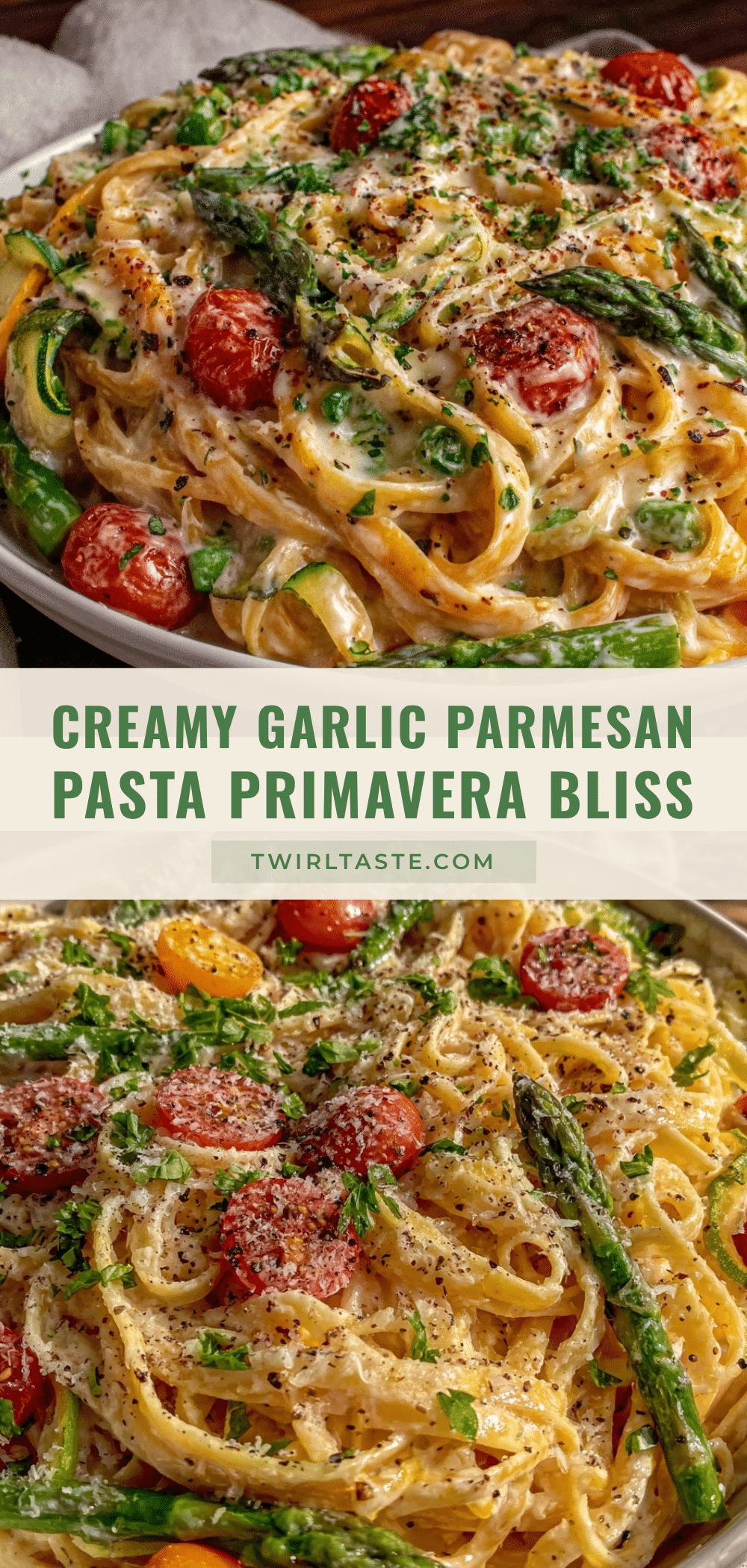
Creamy Garlic Parmesan Pasta Primavera
A quick and easy creamy garlic parmesan pasta primavera featuring fresh seasonal vegetables, silky sauce, and a perfect balance of flavors. This dish is light yet indulgent, perfect for spring and summer meals.
- Prep Time: 10 minutes
- Cook Time: 20 minutes
- Total Time: 30 minutes
- Yield: 4 servings 1x
- Category: Main Course
- Cuisine: Italian
Ingredients
- 12 ounces (340 grams) fettuccine or linguine pasta
- 1 cup zucchini, sliced into half-moons
- 1 cup yellow squash, sliced into half-moons
- 1 cup cherry tomatoes, halved
- ½ cup snap peas, trimmed
- ½ cup thinly sliced red bell pepper (optional)
- 4 cloves garlic, minced
- 3 tablespoons unsalted butter, softened
- 1 cup (240 ml) heavy cream
- 1 cup freshly grated parmesan cheese
- 2 tablespoons olive oil
- 1 tablespoon fresh lemon juice
- Salt and freshly ground black pepper, to taste
- A handful fresh basil, chopped (optional)
- ½ cup (120 ml) reserved pasta water
Instructions
- Bring a large pot of salted water to a boil. Add 12 ounces (340 g) of pasta and cook according to package instructions until al dente, about 8-10 minutes. Reserve ½ cup (120 ml) of pasta water before draining. Set pasta aside.
- While pasta cooks, wash and slice veggies: zucchini and yellow squash into thin half-moons, cherry tomatoes halved, snap peas trimmed, and bell pepper thinly sliced. This prep takes about 10 minutes.
- Heat 2 tablespoons olive oil in a large skillet over medium heat. Add minced garlic and cook for about 30 seconds until fragrant but not browned.
- Add zucchini, yellow squash, snap peas, and bell pepper to the skillet. Sauté for 4-5 minutes until veggies are tender-crisp. Toss in cherry tomatoes last and cook for another 1-2 minutes just to warm them through.
- Reduce heat to low and add 3 tablespoons unsalted butter to the skillet. Once melted, pour in 1 cup (240 ml) heavy cream and stir to combine. Simmer gently for 2-3 minutes, stirring occasionally.
- Gradually add 1 cup freshly grated parmesan cheese, stirring until melted and smooth. If sauce is too thick, add reserved pasta water a little at a time until desired consistency is reached.
- Add drained pasta directly into the skillet with sauce and veggies. Toss well to coat evenly. Stir in 1 tablespoon fresh lemon juice and season with salt and freshly ground black pepper to taste. Cook together for 1-2 minutes to meld flavors.
- Remove from heat and sprinkle with chopped fresh basil if using. Serve immediately while warm and creamy.
Notes
Avoid burning garlic by cooking it just until fragrant. Sauté vegetables quickly and in batches if needed to keep them crisp. Use freshly grated parmesan for a silky sauce. Reserve pasta water to loosen sauce if needed. Toss pasta and sauce off heat to prevent curdling. Leftovers can be stored up to 3 days; reheat gently with cream or milk.
Nutrition
- Serving Size: 1 serving (approxima
- Calories: 520
- Sugar: 7
- Sodium: 450
- Fat: 22
- Saturated Fat: 13
- Carbohydrates: 55
- Fiber: 6
- Protein: 15
Keywords: creamy garlic parmesan pasta, pasta primavera, easy veggie pasta, spring pasta recipe, summer pasta, creamy pasta sauce, fresh vegetables pasta