Love this? Save it for later!
Share the inspiration with your friends
“I wasn’t planning on making prime rib that night,” I admit, laughing as I recall the chaos. It was a chilly Friday evening, and my friend Matt had just dropped by unexpectedly with a huge, beautifully marbled prime rib roast. No plans, no recipe, just the challenge of turning that big hunk of beef into something unforgettable. Honestly, I was tempted to just slap it in the oven and hope for the best, but then I remembered a tip I’d overheard at a cooking class months earlier—a method called reverse searing. It sounded fancy, but I figured, why not give it a shot?
What happened next? Well, let me tell you, the kitchen looked like a war zone by the time we were done—flour everywhere, a cracked mixing bowl (don’t ask), and me juggling timers like a circus act. But when we finally sliced into that roast, the crust was crispy and seasoned just right, while the inside stayed juicy and tender, perfectly pink from edge to edge. You know that feeling when a dish surprises you so much you want to high-five yourself? That was it.
Maybe you’ve been there—standing in front of the oven, worried your roast might end up dry or undercooked. This recipe for the perfect reverse-sear prime rib roast with juicy tender crust is exactly the kind of foolproof game-changer I wish I had years ago. It’s not just a method; it’s a little kitchen magic that turned an impromptu dinner into a memorable feast that Matt still raves about every time we catch up. So, if you want to impress without the stress, keep reading—I’m about to share everything I learned the hard way.
Why You’ll Love This Recipe
This perfect reverse-sear prime rib roast recipe isn’t just another roast—it’s the one that stands out when you want that juicy, tender crust without spending hours fretting over temperature. Let me break down why this recipe has earned a permanent spot in my cooking rotation:
- Quick & Easy: While prime rib might sound intimidating, this recipe simplifies the process with a straightforward oven-to-sear method that you can master in under 3 hours.
- Simple Ingredients: No obscure spices or hard-to-find sauces—just quality beef, salt, pepper, and a few aromatics you probably have on hand.
- Perfect for Special Occasions: Whether it’s a holiday dinner or a weekend celebration, this roast steals the show without demanding all your attention.
- Crowd-Pleaser: From my experience, even the picky eaters ask for seconds thanks to the tender texture and rich flavor.
- Unbelievably Delicious: The reverse sear locks in juices while creating a crust that’s crisp without being burnt—trust me, it’s next-level comfort food.
This recipe stands apart because it balances science and soul. The low-and-slow oven roast gently cooks the meat evenly, while the final sear adds that crave-worthy crust. I tweak the seasoning just enough to bring out the beef’s natural flavor without overpowering it. Honestly, it’s the kind of dish that makes you close your eyes after the first bite and think, “Yep, this is why I cook.”
What Ingredients You Will Need
This recipe uses straightforward, quality ingredients to deliver bold flavor with minimal fuss. Most are pantry staples, and the prime rib is the star, so choose it carefully!
- Prime Rib Roast (about 4 to 5 pounds/1.8 to 2.3 kg, bone-in preferred for flavor and even cooking)
- Kosher Salt (generous amount for seasoning—helps develop a savory crust)
- Freshly Ground Black Pepper (coarse grind works best for texture)
- Garlic Cloves (4 to 5, minced—adds aromatic depth)
- Fresh Rosemary (2 to 3 sprigs, chopped—gives that classic earthy note)
- Olive Oil (2 tablespoons, for rubbing and searing)
- Unsalted Butter (2 tablespoons, optional for basting during sear)
- Onion Powder (1 teaspoon, optional for subtle sweetness)
- Mustard Powder (1 teaspoon, optional for gentle tang)
Ingredient tips: I usually recommend a well-marbled prime rib from a trusted butcher or brand like Snake River Farms when available. If you can’t find bone-in, boneless works fine but expect a slightly different cooking time. For seasoning, kosher salt is non-negotiable—it really brings out the beef’s flavor and helps form that perfect crust.
Equipment Needed
- Oven with a reliable temperature setting (a convection oven helps with even roasting but isn’t required)
- Cast Iron Skillet or heavy-duty stainless steel pan for searing—this is key to getting that perfect crust
- Meat Thermometer (digital instant-read preferred for accuracy)
- Roasting Rack to elevate the roast and allow air circulation
- Cutting Board (preferably wood or heavy-duty plastic) to rest and carve the roast
- Tongs or heatproof gloves for handling the hot pan and roast safely
If you don’t have a cast iron skillet, a heavy-bottomed stainless steel pan works fine—just make sure it’s oven-safe. I once tried searing in a nonstick pan, and the crust didn’t develop as well, so steer clear of that. Also, a quality meat thermometer is worth every penny; I use a Thermapen, but budget-friendly options like ThermoPro work well too.
Preparation Method
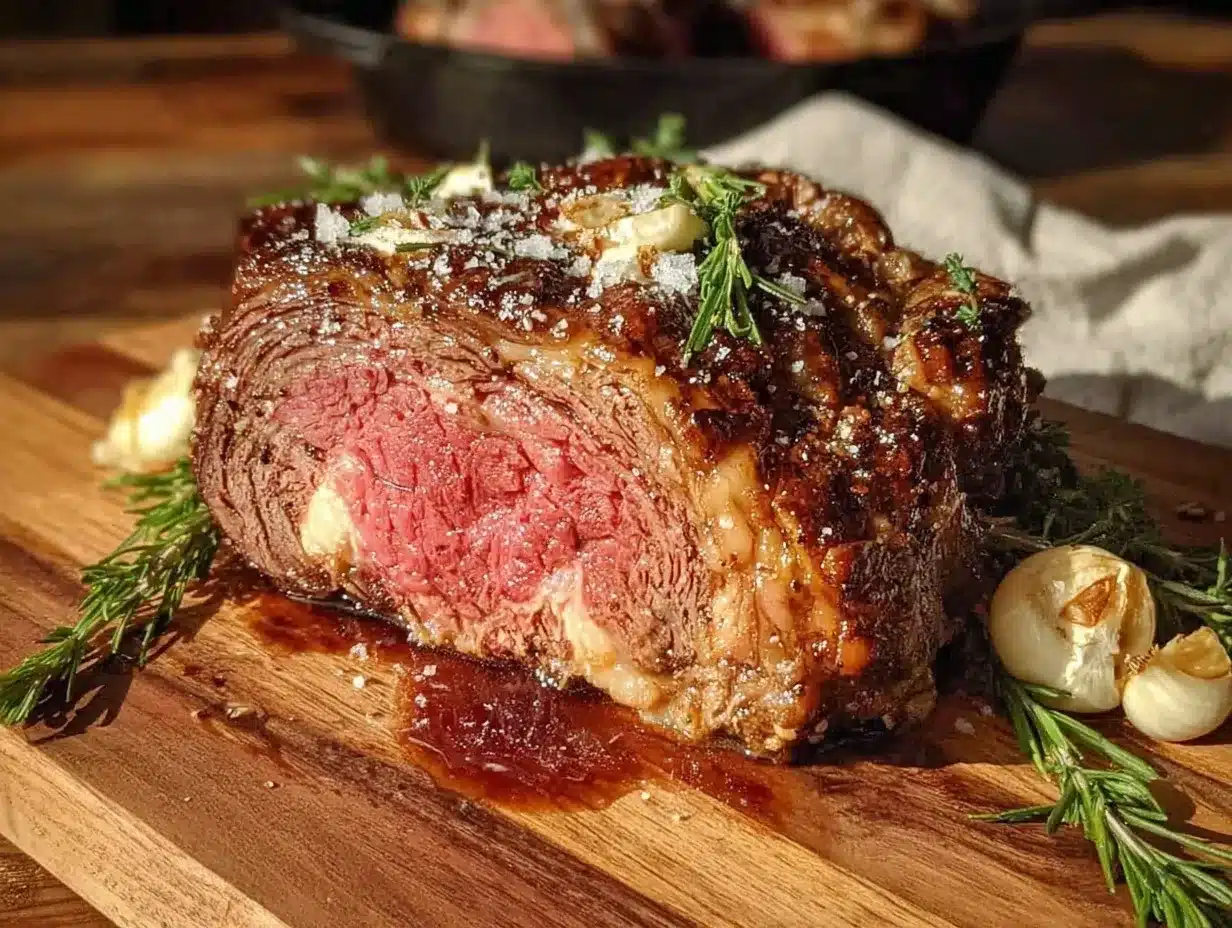
- Prep the Roast (10 minutes): Remove your prime rib from the fridge at least 1 hour before cooking to bring it to room temperature. Pat it dry very well with paper towels—moisture is the enemy of a good crust.
- Season Generously: Rub the entire roast with olive oil, then coat evenly with kosher salt and freshly ground black pepper. Sprinkle minced garlic, chopped rosemary, onion powder, and mustard powder all over and gently press into the meat. Don’t skimp on salt; it helps with moisture retention and flavor depth.
- Preheat Oven & Setup (5 minutes): Preheat your oven to 225°F (107°C). Set your roasting rack inside a shallow pan or baking sheet to catch drippings.
- Slow Roast (2 to 2.5 hours): Place the roast on the rack and insert your meat thermometer into the thickest part, avoiding bone. Roast until the internal temperature reaches 120°F (49°C) for rare, or 125°F (52°C) for medium-rare. This usually takes about 2 hours but check early and often after 1.5 hours. Low and slow is the secret here—patience pays off.
- Rest the Roast (20 minutes): Remove from oven, tent loosely with foil, and let rest. This step lets the juices redistribute and prepares the meat for the final sear.
- Preheat Searing Pan: While resting, heat your cast iron skillet over high heat until smoking hot. Add a tablespoon of olive oil and butter to the pan.
- Final Sear (5-7 minutes): Carefully place the roast into the skillet. Sear each side for 1-2 minutes until a deep, golden-brown crust forms. Use tongs to turn gently—don’t pierce the meat or juices will escape. The smell at this point is downright irresistible.
- Final Rest & Carve: Transfer the roast to the cutting board and rest for another 10 minutes before slicing. This final rest ensures juicy, tender slices every time.
Quick tip: If your roast starts to brown too fast during searing, lower the heat slightly. And remember, the internal temp will rise a few degrees during resting, so pull it off the heat a little earlier than you think. I learned this the hard way after serving a roast that was just a tad overdone.
Cooking Tips & Techniques
Getting that perfect reverse-sear prime rib roast crust can feel like a balancing act. Here are some tips I picked up along the way:
- Don’t Skip the Resting: Resting after roasting and again after searing is crucial. It lets the juices settle, making the meat tender and juicy instead of dry.
- Use a Reliable Thermometer: Guesswork is the enemy here. A digital instant-read thermometer is your best friend for pinpointing doneness.
- Patience is Key: Resist the urge to crank the oven up to speed things along. The low-and-slow method ensures even cooking and better texture.
- Season Like You Mean It: Salt and pepper are simple, but don’t be shy with them. The crust’s flavor depends on good seasoning.
- High Heat for the Sear: Make sure your pan is smoking hot before searing. This quick blast of heat is what creates that amazing crust.
- Don’t Crowd the Pan: If your roast is large, sear in batches or use a pan that fits comfortably. Overcrowding traps steam and prevents browning.
- Clean Pan After Searing: You can deglaze the pan with a splash of red wine or beef broth to make a quick pan sauce—just saying.
Variations & Adaptations
Want to switch things up? Here are some ways to customize this perfect reverse-sear prime rib roast recipe:
- Herb Variations: Swap rosemary for thyme or add crushed juniper berries for a piney kick.
- Spice it Up: Add smoked paprika or a pinch of cayenne pepper to the seasoning mix for a subtle heat.
- Dietary Adjustments: For a dairy-free option, skip the butter in the sear and use avocado oil instead—it still crisps beautifully.
- Cooking Method: If you prefer, you can finish the roast under a broiler instead of pan-searing, but watch closely to avoid burning.
- Personal Twist: I once tried rubbing the roast with horseradish paste before the final sear—unexpected but delicious!
Serving & Storage Suggestions
Serve this prime rib roast warm, sliced thick or thin depending on your mood. It pairs wonderfully with classic sides like garlic mashed potatoes or roasted Brussels sprouts. A robust red wine, like Cabernet Sauvignon or Malbec, compliments the rich beef flavors nicely.
To store leftovers, wrap slices tightly in foil and refrigerate for up to 3 days. Reheat gently in a low oven (about 250°F / 120°C) covered with foil to maintain moisture. Avoid microwaving if you can—it tends to dry out the meat.
Flavors actually deepen after a day or two in the fridge, so making it ahead can be a smart move for holiday meals. Just bring it back to room temperature before reheating for the best experience.
Nutritional Information & Benefits
This prime rib roast packs a protein punch with approximately 70 grams of protein per 6-ounce (170 g) serving. It’s rich in iron, zinc, and B vitamins, essential for energy and immune support. The healthy fats from the marbling contribute to satiety and flavor.
Keep in mind the recipe is naturally gluten-free and can be adapted for dairy-free diets by omitting butter. While prime rib is indulgent, balancing your plate with plenty of veggies and moderate portions makes it a satisfying, nourishing meal.
Conclusion
The perfect reverse-sear prime rib roast with juicy tender crust is the kind of recipe that turns heads and wins hearts at the dinner table. It’s approachable enough for home cooks yet impressive enough for special occasions. I love how this method takes the guesswork out and lets the beef shine.
Give it a try and don’t be afraid to make it your own—switch up the herbs, try a different searing fat, or pair it with your favorite sides. I’d love to hear how your roast turns out or any twists you add, so please leave a comment below. Cooking prime rib doesn’t have to be intimidating, and with this recipe, it’s bound to become a highlight of your culinary repertoire.
Happy roasting, and remember—sometimes the best meals come from a little chaos and a lot of love!
FAQs
How do I know when my prime rib is done?
Use a digital meat thermometer to check the internal temperature. For rare, aim for 120°F (49°C); medium-rare is 125°F (52°C). Remember, it will continue to cook a bit while resting.
Can I use a boneless prime rib roast for this recipe?
Yes, boneless works fine but may cook slightly faster. Just keep a close eye on the internal temperature to avoid overcooking.
Why is the reverse sear method better than traditional roasting?
Reverse searing cooks the meat evenly at low temperature first, then finishes with a high-heat sear for a perfect crust. It reduces the risk of overcooking the exterior while undercooking the center.
Can I prepare this recipe ahead of time?
Absolutely! You can roast the prime rib up to a day ahead and reheat gently before the final sear or serve cold in sandwiches.
What sides go best with prime rib roast?
Classic choices include creamy mashed potatoes, roasted vegetables, Yorkshire pudding, or a fresh green salad. For drinks, a full-bodied red wine complements the rich beef beautifully.
Pin This Recipe!
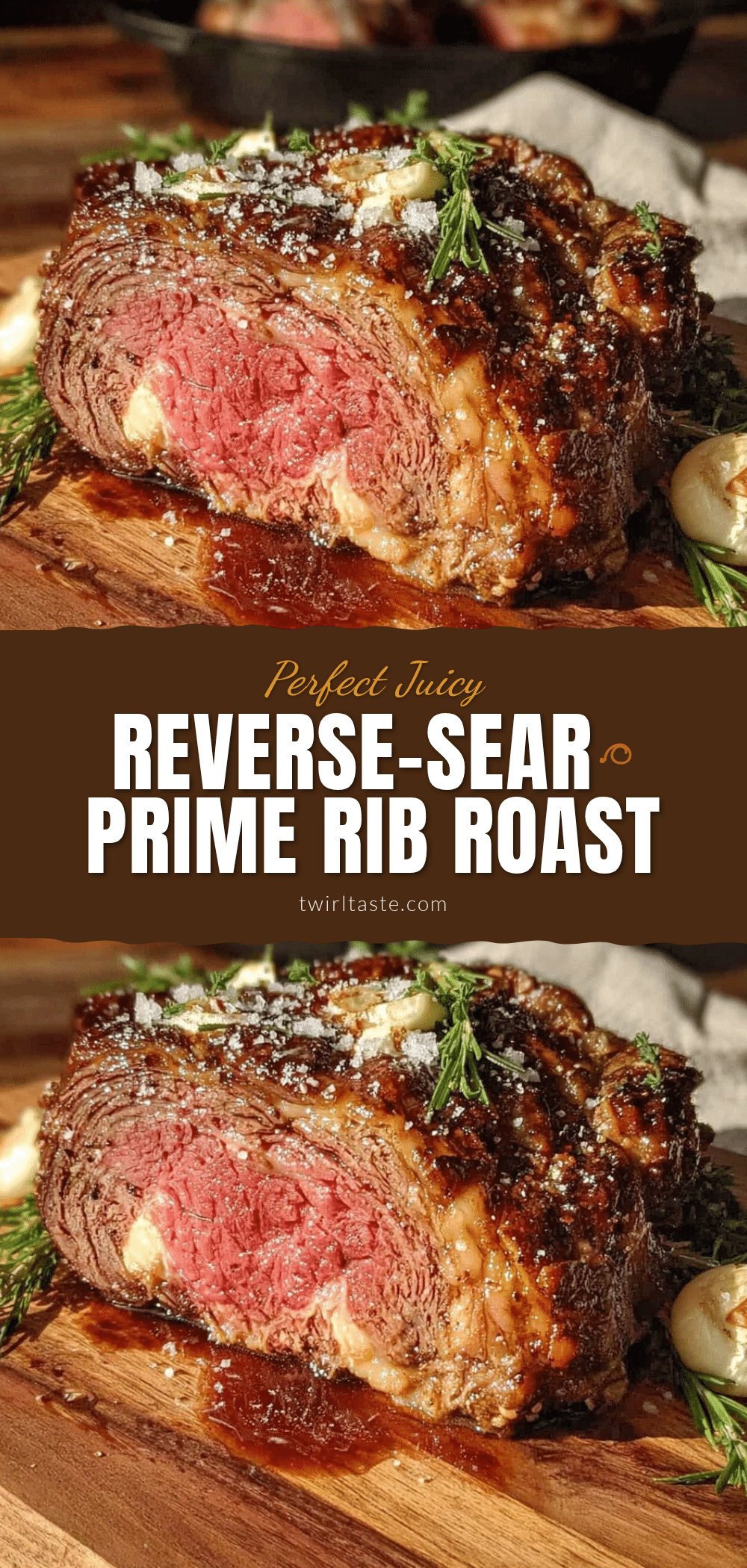
Perfect Reverse-Sear Prime Rib Roast Recipe for Juicy Tender Crust
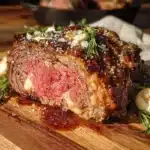
A foolproof reverse-sear method for prime rib roast that delivers a juicy, tender crust with perfectly cooked, flavorful beef. Ideal for special occasions and impressing guests.
- Prep Time: 15 minutes
- Cook Time: 2 to 2.5 hours
- Total Time: 2 hours 45 minutes to 3 hours
- Yield: 8 servings 1x
- Category: Main Course
- Cuisine: American
Ingredients
- 4 to 5 pounds bone-in prime rib roast
- Kosher salt, generous amount
- Freshly ground black pepper, coarse grind
- 4 to 5 garlic cloves, minced
- 2 to 3 sprigs fresh rosemary, chopped
- 2 tablespoons olive oil
- 2 tablespoons unsalted butter (optional)
- 1 teaspoon onion powder (optional)
- 1 teaspoon mustard powder (optional)
Instructions
- Remove prime rib from fridge at least 1 hour before cooking to bring to room temperature. Pat dry thoroughly with paper towels.
- Rub entire roast with olive oil, then coat evenly with kosher salt and freshly ground black pepper. Sprinkle minced garlic, chopped rosemary, onion powder, and mustard powder over the roast and press gently into the meat.
- Preheat oven to 225°F (107°C). Place roasting rack inside a shallow pan or baking sheet.
- Place roast on rack and insert meat thermometer into thickest part, avoiding bone. Roast until internal temperature reaches 120°F (49°C) for rare or 125°F (52°C) for medium-rare, about 2 to 2.5 hours. Check temperature after 1.5 hours.
- Remove roast from oven and tent loosely with foil. Let rest for 20 minutes to redistribute juices.
- While resting, heat cast iron skillet over high heat until smoking hot. Add 1 tablespoon olive oil and butter to pan.
- Sear roast carefully in skillet, 1-2 minutes per side, until deep golden-brown crust forms. Use tongs to turn gently without piercing meat.
- Transfer roast to cutting board and rest for another 10 minutes before slicing and serving.
Notes
Bring roast to room temperature before cooking and pat dry to ensure a good crust. Use a reliable digital thermometer to avoid overcooking. Rest the meat twice: after roasting and after searing to keep it juicy. If browning too fast during sear, reduce heat. Avoid nonstick pans for searing as they don’t develop crust well. Deglaze pan after searing for a quick sauce if desired.
Nutrition
- Serving Size: 6 ounces (170 grams)
- Calories: 600
- Sodium: 700
- Fat: 45
- Saturated Fat: 18
- Carbohydrates: 1
- Protein: 70
Keywords: prime rib, reverse sear, roast beef, holiday roast, juicy prime rib, tender crust, beef roast, special occasion, easy prime rib