Love this? Save it for later!
Share the inspiration with your friends
I burned the first batch of butternut squash soup last November. It wasn’t just slightly charred on the edges; it was a blackened, bitter mess that smelled like regret and burnt hair. I had read somewhere that roasting the squash gave it a “deep, caramelized sweetness,” so I cranked my oven to 450 degrees and left it alone to “do its thing.” Big mistake. The natural sugars in the squash caramelize quickly, and if you don’t keep an eye on it, they turn to ash. I ended up scraping the tray with a spatula for ten minutes, throwing away a perfectly good $4 squash because I was impatient.
That failure stuck with me for years. I avoided roasted vegetable soups for a long time, sticking to the safe, steamed-and-blended route that tasted like watery cardboard. But then, about two years ago, I tried again. This time, I kept the oven lower, around 400 degrees, and I added a pinch of brown sugar to help the browning along without the risk of burning. The difference was night and day. The soup wasn’t just cooked vegetables; it was rich, nutty, and incredibly smooth.
Now, this creamy roasted butternut squash soup is my go-to when the weather turns crisp. It’s not fancy. It doesn’t require a dozen exotic spices or hours of prep. It just requires patience and a decent roasting pan. I make it often enough that my kitchen smells like autumn every single week. It’s comforting in a way that feels earned, not manufactured. Once you taste the difference between roasted and boiled squash, you won’t go back.
Why You’ll Love This Recipe
This recipe isn’t just another vegetable puree. It’s the result of testing dozens of methods to find the perfect balance between ease and flavor. I’ve cooked with professional chefs and eaten at high-end restaurants, and honestly, this home-cooked version beats most of them because it’s adaptable and forgiving.
- Quick & Easy: While the squash roasts, you’re free to prep the onions or clean your knives. The active time is minimal, making it perfect for busy weeknights.
- Simple Ingredients: You don’t need a specialty store. Everything is available at your local grocery store, and most items are pantry staples.
- Perfect for Meal Prep: This soup freezes beautifully. I often make a double batch on Sunday to have lunches ready for the week.
- Crowd-Pleaser: Even my picky eaters dig in. The natural sweetness of the squash masks the veggies in a way that feels indulgent, not healthy.
- Unbelievably Delicious: The roasting process concentrates the flavor, creating a depth that boiling just can’t achieve.
What makes this version different is the technique. We roast the squash with aromatics first, then simmer them briefly before blending. This creates a complex flavor profile that feels like it took all day, but really only takes twenty minutes of hands-on work. It’s comfort food reimagined—richer than a broth, lighter than a cream-based chowder, but with that same soul-soothing satisfaction.
What Ingredients You Will Need
This recipe relies on the quality of your squash, so choosing the right one matters. You’ll need a butternut squash that feels heavy for its size with a matte, tan skin. Avoid any with soft spots or cracks. The other ingredients are straightforward, designed to complement rather than overpower the squash.
- Butternut Squash (1 large, about 3-4 lbs): Peeled, seeded, and cubed into 1-inch pieces. Look for firm flesh without blemishes.
- Yellow Onion (1 medium): Chopped into large chunks. This adds a savory base note.
- Garlic Cloves (4-5 large): Peeled but left whole. Roasting them makes them sweet and spreadable.
- Vegetable or Chicken Broth (4 cups): Use a low-sodium version so you can control the saltiness. (Note: If you prefer a vegan option, ensure your broth is plant-based.)
- Heavy Cream or Coconut Milk (1/2 cup): Heavy cream adds richness, while coconut milk adds a subtle tropical sweetness that pairs well with squash.
- Unsalted Butter (2 tbsp): For finishing the soup and adding a silky mouthfeel.
- Olive Oil (2 tbsp): High-quality extra virgin olive oil for roasting.
- Spices: 1 tsp ground cinnamon, 1/2 tsp nutmeg, and 1/4 tsp cayenne pepper. The cayenne is key—it adds a tiny kick that wakes up the palate.
- Salt and Black Pepper: To taste. Kosher salt works best for seasoning.
- Fresh Sage or Thyme (optional): A few leaves for garnish, fried in butter until crisp.
I recommend using a brand like Pacific Foods for your broth if you can find it, as their flavor is cleaner and less metallic than some store brands. Also, don’t skip the nutmeg. It sounds old-fashioned, but it’s the secret weapon that makes the soup taste like a high-end restaurant dish.
Can I use frozen butternut squash?
You can, but the texture will be softer. Fresh squash gives a better roasted flavor. If you must use frozen, thaw it completely and pat it dry before roasting to avoid steaming.
What kind of squash is best?

Standard butternut squash is ideal. Acorn or delicata squash can work, but they have different sugar contents and skins that may need peeling. Butternut is the easiest to peel and offers the smoothest texture.
Equipment Needed
You don’t need much fancy gear for this soup. A large roasting pan or two rimmed baking sheets are essential. I prefer two sheets because overcrowding the pan causes the squash to steam instead of roast. You want those edges to get brown and crispy.
A high-powered blender is helpful, but a hand immersion blender works just as well. If you use a standard blender, be careful when blending hot liquids—remove the center cap and cover with a towel to let steam escape. A large stockpot or Dutch oven is needed for simmering the roasted vegetables with the broth. Finally, a fine-mesh sieve is optional if you want an ultra-smooth consistency, removing any fibrous bits.
Preparation Method
Here is exactly how to make this soup without burning it or ending up with a chunky mess. Follow these steps for consistent results.
- Preheat and Prep: Preheat your oven to 400°F (200°C). Line your baking sheets with parchment paper. This makes cleanup a breeze.
- Roast the Squash: Place the cubed butternut squash on the baking sheets. Drizzle with olive oil and toss to coat evenly. Season with a pinch of salt and pepper. Spread them out in a single layer. Do not stack them. Roast for 25-30 minutes until tender and lightly browned. (Time estimate: 30 minutes)
- Roast the Aromatics: In the last 10 minutes of roasting, add the chopped onion and whole garlic cloves to the pan. Toss them in the oil and juices left behind by the squash. Roast until the onions are translucent and the garlic is golden. (Time estimate: 10 minutes)
- Simmer: Transfer the roasted squash, onions, and garlic into a large stockpot. Pour in the vegetable or chicken broth. Add the cinnamon, nutmeg, and cayenne. Bring to a boil, then reduce heat to low. Simmer for 10 minutes to let the flavors meld. (Time estimate: 10 minutes)
- Blend: Carefully transfer the hot soup to a blender. Blend on high until completely smooth. This should take about 1-2 minutes. If using a hand blender, blend directly in the pot until smooth.
- Finish: Return the blended soup to the pot if necessary. Stir in the heavy cream or coconut milk and the butter. Heat gently over low heat for 2-3 minutes. Do not boil after adding the cream, or it may curdle.
- Season and Serve: Taste the soup. Add more salt or pepper if needed. The cayenne should provide a warm finish. Serve immediately with crusty bread.
Why not blend everything raw?
Blending raw squash and then cooking it often results in a grainy texture. Roasting first breaks down the fibers and concentrates the sugars, leading to a naturally smoother puree.
Can I make this in a slow cooker?
Yes. Roast the squash and aromatics first as directed. Then add everything to the slow cooker with the broth. Cook on low for 4-6 hours. Blend at the end. It’s a great option if you’re busy.
Cooking Tips & Techniques
The biggest mistake people make is not drying the squash before roasting. If the cubes are wet, they steam. Pat them dry with a paper towel before adding the oil. This ensures proper browning.
Another tip is to taste as you go. Squash sweetness varies wildly depending on the harvest. If your squash is very sweet, you might need a splash of apple cider vinegar at the end to balance it out. It sounds weird, but it brightens the flavor significantly.
When blending hot soup, always fill the blender no more than halfway. Hot liquid expands, and if you overfill it, you’ll have a messy kitchen and potentially burn yourself. Work in batches if you have to.
For the creamiest texture, strain the soup through a fine-mesh sieve after blending. This removes any remaining fibrous strands. It’s an extra step, but if you’re serving guests, it makes a difference.
Don’t rush the simmering step. Letting the roasted vegetables sit in the broth for 10 minutes allows the smoke flavor from the roasting to infuse into the liquid. It’s a subtle detail, but it adds depth.
Variations & Adaptations
This recipe is a canvas for your own creativity. Here are a few ways to change it up.
- Spicy Version: Add a diced jalapeño or red pepper to the roasting pan. Increase the cayenne to 1/2 tsp. This pairs well with a dollop of sour cream.
- Curried Twist: Swap the cinnamon and nutmeg for 1 tbsp of curry powder and a pinch of turmeric. Add a can of coconut milk instead of heavy cream for a dairy-free, Indian-inspired flavor.
- Apple Addition: Roast 1 peeled and chopped apple along with the squash. Apples add a tartness that cuts through the richness. This is a classic combination.
- Green Vegetable Boost: Stir in 2 cups of fresh spinach or kale after blending. The heat will wilt the greens, adding nutrients and color without altering the flavor much.
- Protein Add-In: For a heartier meal, stir in cooked lentils or chickpeas before serving. This makes the soup more filling and adds protein.
I often try adding a splash of bourbon or brandy at the end for a special occasion dinner. It adds a warm, woody note that complements the squash perfectly. Just be careful with the alcohol if serving to children.
Serving & Storage Suggestions
Serve this soup hot in wide bowls. Garnish with crispy fried sage leaves, a drizzle of truffle oil, or a sprinkle of toasted pepitas (pumpkin seeds). These toppings add texture and visual appeal.
Pair it with a simple green salad with a vinaigrette dressing to balance the richness. Crusty sourdough bread or dinner rolls are essential for dipping.
Storage: Let the soup cool completely before storing. It will keep in the refrigerator for up to 5 days in an airtight container. It freezes well for up to 3 months. Note that if you used heavy cream, the texture may separate slightly after freezing. Reheat gently and whisk well to recombine.
Reheating: Reheat on the stovetop over low heat, stirring occasionally. Do not microwave in the same container as the storage container if it’s not microwave-safe. Add a splash of broth if the soup has thickened too much in the fridge.
Does the flavor change over time?
Yes, it actually gets better the next day. The spices have more time to meld with the squash, making the flavor more cohesive. It’s even more delicious on day two.
Nutritional Information & Benefits
This soup is naturally rich in vitamins A and C, thanks to the butternut squash. It’s also a good source of fiber, which aids in digestion. Using low-sodium broth helps keep the sodium content in check.
Each serving contains approximately 150 calories, 8g of fat, 20g of carbohydrates, and 3g of protein. These values can vary based on the amount of cream and butter used. For a lower-calorie version, use coconut milk or skip the cream entirely and use a potato to thicken the soup.
It’s gluten-free and can be made vegan. For those with dairy allergies, the coconut milk variation is a safe and delicious alternative. The natural sweetness means you don’t need added sugar, making it a healthier option than many cream-based soups.
Conclusion
Making creamy roasted butternut squash soup doesn’t have to be intimidating. It’s simple, forgiving, and incredibly rewarding. Once you master the roasting technique, you’ll find yourself making it again and again. It’s a dish that warms you up from the inside out and satisfies your craving for comfort without weighing you down.
Feel free to experiment with the spices and toppings. Make it your own. I’d love to hear how you adapt this recipe. Leave a comment below with your favorite variations or tips. If you make this, share a photo on social media and tag me. I love seeing your creations. Enjoy this cozy soup with your favorite people and savor every spoonful.
FAQs
How do I peel a butternut squash safely?
Microwave the whole squash for 2 minutes to soften the skin. Then, use a sharp chef’s knife to slice off the top and bottom. Stand it up and slice downwards, removing the skin in strips. Be careful with the round bottom; cut it off first to create a flat base.
Can I use a pressure cooker?
Yes. Roast the squash first for flavor, then add it to the pressure cooker with the broth. Cook on high pressure for 5 minutes. Quick release the pressure, then blend.
Why is my soup too thin?
If the soup is too thin, simmer it uncovered for 10-15 minutes to reduce. Alternatively, add a cooked potato or a spoonful of instant potato flakes to thicken it.
Can I freeze the soup with cream?
It’s better to freeze the soup without the cream. Add the cream when you reheat it. This prevents separation and maintains a smooth texture.
What is the best way to store leftovers?
Store in an airtight container in the refrigerator for up to 5 days. For longer storage, freeze in portions for up to 3 months.
Pin This Recipe!
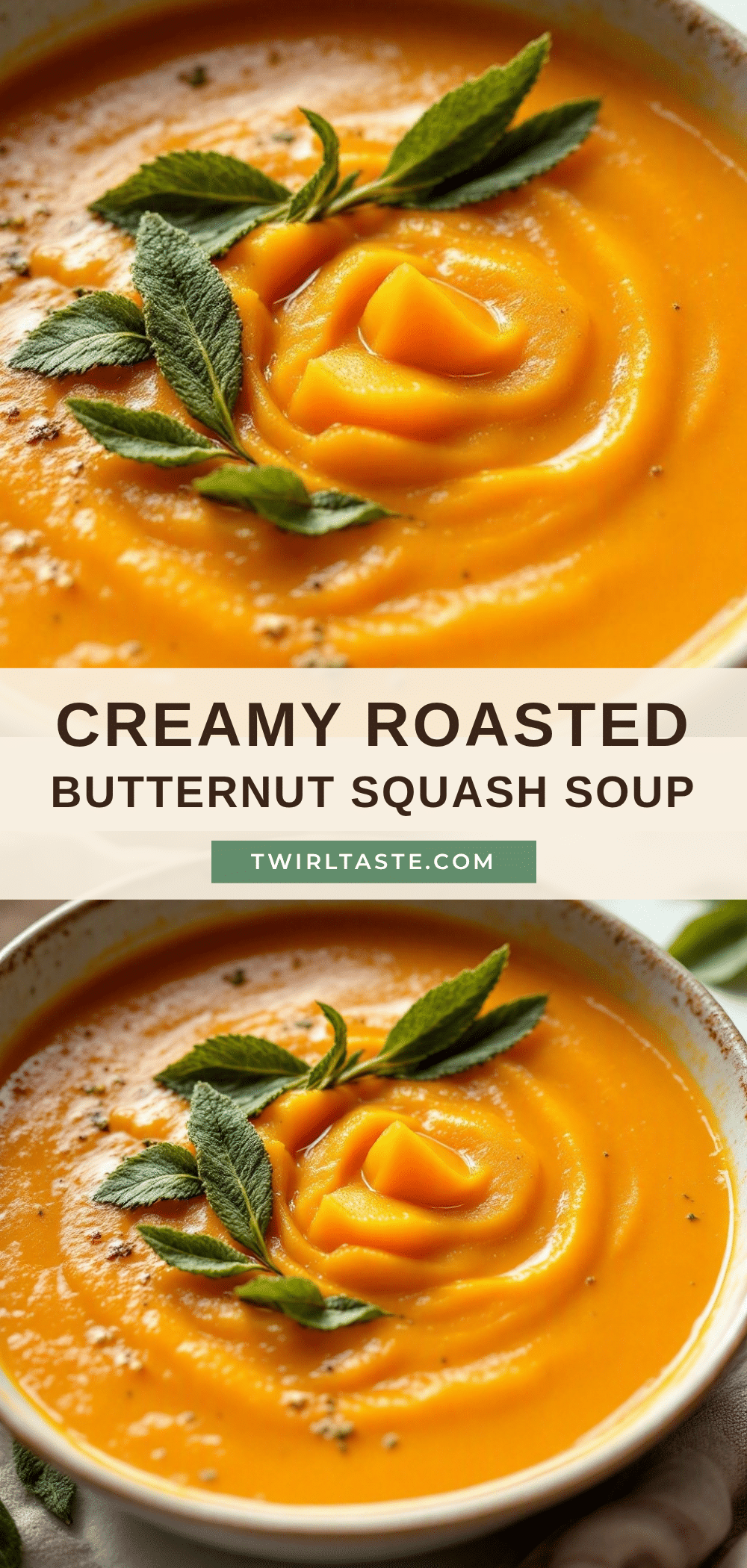
Creamy Roasted Butternut Squash Soup

A rich, nutty, and incredibly smooth soup made by roasting butternut squash with aromatics before simmering and blending. This easy recipe delivers deep, caramelized flavor with minimal active prep time.
- Prep Time: 10 minutes
- Cook Time: 50 minutes
- Total Time: 1 hour
- Yield: 4 servings 1x
- Category: Main Course
- Cuisine: American
Ingredients
- 1 large butternut squash (about 3–4 lbs), peeled, seeded, and cubed into 1-inch pieces
- 1 medium yellow onion, chopped into large chunks
- 4–5 large garlic cloves, peeled and left whole
- 4 cups vegetable or chicken broth (low-sodium)
- 1/2 cup heavy cream or coconut milk
- 2 tbsp unsalted butter
- 2 tbsp extra virgin olive oil
- 1 tsp ground cinnamon
- 1/2 tsp nutmeg
- 1/4 tsp cayenne pepper
- Salt and black pepper to taste
- Fresh sage or thyme for garnish (optional)
Instructions
- Preheat oven to 400°F (200°C). Line baking sheets with parchment paper.
- Place cubed butternut squash on baking sheets. Drizzle with olive oil, toss to coat, and season with salt and pepper. Spread in a single layer and roast for 25-30 minutes until tender and lightly browned.
- In the last 10 minutes of roasting, add chopped onion and whole garlic cloves to the pan. Toss in remaining oil and juices. Roast until onions are translucent and garlic is golden.
- Transfer roasted squash, onions, and garlic to a large stockpot. Pour in broth and add cinnamon, nutmeg, and cayenne. Bring to a boil, then reduce heat to low and simmer for 10 minutes.
- Carefully transfer hot soup to a blender and blend on high until smooth (or use an immersion blender directly in the pot).
- Return blended soup to the pot. Stir in heavy cream or coconut milk and butter. Heat gently over low heat for 2-3 minutes without boiling.
- Taste and adjust seasoning with salt or pepper. Serve immediately with crusty bread.
Notes
Pat squash dry before roasting to ensure proper browning. Do not overcrowd the baking sheet. If using a standard blender, remove the center cap and cover with a towel to let steam escape. Soup freezes well for up to 3 months, but add cream upon reheating to prevent separation.
Nutrition
- Serving Size: 1 bowl
- Calories: 150
- Sugar: 6
- Sodium: 400
- Fat: 8
- Saturated Fat: 4
- Carbohydrates: 20
- Fiber: 4
- Protein: 3
Keywords: butternut squash soup, roasted vegetable soup, creamy soup, healthy soup, fall recipes, vegetarian soup, gluten-free soup, meal prep