Love this? Save it for later!
Share the inspiration with your friends
That first crunch of a crisp apple wedge, followed by the burst of a juicy grape and the sweet squish of a ripe strawberry—all on one skewer. It’s the kind of snack that makes you forget you’re eating something good for you. I wasn’t trying to be a Pinterest-perfect mom the first time I made these. Honestly, it was 3 PM on a Tuesday, the kids were circling the kitchen like hungry sharks, and the only thing I had in the fridge was a bag of slightly sad-looking grapes and a lone banana. I needed a distraction, fast.
So I started slicing. I found some forgotten pineapple chunks in the freezer, a few strawberries that were still okay, and a random apple. I grabbed some skewers from the back of the pantry—leftover from a summer barbecue—and started threading. My daughter, who was “helping” (read: eating more fruit than she was skewering), called them “rainbow sticks.” And just like that, a tradition was born.
These aren’t just fruit on a stick. They’re a small, colorful moment of calm in the middle of a chaotic afternoon. They’re the snack that gets kids to eat a whole cup of fruit without a single complaint. And they’re so simple, you’ll feel a little silly reading a recipe for them. But trust me—having a system for these makes all the difference. This is the method I landed on after years of trial and error, soggy fruit, and wobbly skewers. It works every single time.
Why You’ll Love This Recipe
Let’s be real—after-school snacks can be a battlefield. You want something healthy. They want something fun. These rainbow fruit kabobs are the peace treaty you didn’t know you needed. Here’s why they work so well:
- Quick & Easy : From fridge to table in under 15 minutes. Seriously. If you can wash fruit and thread it onto a stick, you’ve got this handled.
- Simple Ingredients : No fancy grocery store runs. Use whatever fruit you have on hand—fresh, frozen, or slightly past its prime. It all works.
- Perfect for After-School Mayhem : This is the snack that stops the hangry meltdowns before they start. It’s fun enough to feel like a treat, but healthy enough to feel good about.
- Crowd-Pleaser : Picky eaters? Kids who swear they don’t like fruit? I’ve watched them devour these. Something about the skewer makes it more exciting.
- Unbelievably Delicious : The texture combo is what gets me. The snap of a grape, the softness of a mango cube, the tart pop of a blueberry. It’s a party in your mouth, and everyone’s invited.
What makes these different from just handing your kid a bowl of fruit? It’s the presentation, honestly. There’s a reason food on a stick is universally loved. It’s portable, it’s less messy, and it feels like a snack you’d get at a carnival. Plus, you can make a batch ahead of time and keep them in the fridge for grab-and-go snacking all week. That’s a game-changer for busy parents.
This recipe isn’t just good—it’s the kind of snack that makes you feel like a superhero parent with almost zero effort. It’s healthy, it’s fun, and it’s the perfect way to turn a boring afternoon into something a little bit special.
What Ingredients You Will Need
This recipe is wonderfully flexible, but having a solid base of ingredients helps you build the most colorful and delicious kabobs. Here’s what I recommend for a classic rainbow effect, plus my personal notes on what works best.
- Strawberries (fresh, hulled and halved or quartered if large) – These give you that bright red color. I look for ones that are deep red all the way through, not white at the core. They’re the anchor of the kabob.
- Oranges or Mandarins (peeled and segmented) – For the orange layer. I love using clementines or mandarins because they’re sweeter and the segments are already the perfect size. If using a navel orange, cut it into wedges or chunks.
- Pineapple (fresh or frozen, cut into 1-inch chunks) – The yellow star of the show. Fresh is best, but frozen chunks (thawed and patted dry) work in a pinch. I always stock up on pre-cut pineapple from the store for convenience.
- Green Grapes (seedless) – For the green section. They’re crunchy, sweet, and hold their shape perfectly on the skewer. Red grapes work too, but green gives you a better color contrast.
- Blueberries (fresh) – These are the easiest ingredient. Just wash and thread. They’re the perfect pop of blue and don’t need any prep work.
- Purple Grapes or Blackberries (for the purple/violet layer) – I usually go with purple grapes because they’re sturdy, but blackberries add a nice tartness. If using blackberries, be gentle—they’re softer and can fall apart.
Optional Add-Ins & Substitutions:
- Kiwi – Peel and slice into rounds or half-moons. Great for an extra green layer if you don’t have grapes.
- Mango – Cubed mango is incredibly sweet and soft. It adds a tropical vibe.
- Banana – Sliced into rounds. Important note: Bananas brown quickly. If using them, brush them with a little lemon or lime juice to keep them looking fresh.
- Melon (cantaloupe or honeydew) – Use a melon baller for fun, uniform shapes. They’re sturdy and hold up well.
- Raspberries – Delicate but delicious. I thread them last, right before serving, because they can get mushy.
I personally prefer using a mix of fruits that are in season. In the summer, it’s all about local berries and stone fruits. In the winter, citrus and tropical fruits are your best friends. The beauty of this recipe is that there are no wrong answers—just colors that make you happy.
Equipment Needed
You don’t need much to make these kabobs, which is part of their charm. Here’s what I use:
- Wooden Skewers (6-8 inches long) – Standard bamboo skewers are perfect. I like the shorter ones for smaller hands. If you’re worried about splinters, you can find food-grade wooden skewers that are smoother.
- Sharp Knife – A good chef’s knife or a paring knife makes quick work of cutting fruit into uniform pieces. Uniformity is key for a pretty kabob.
- Cutting Board – Any clean cutting board will do. I have a large wooden one that I use just for fruit.
- Mixing Bowls – A few small bowls to hold your prepped fruit before assembling. It makes the assembly line process much smoother.
- Paper Towels – Patting fruit dry is a step you don’t want to skip. Wet fruit makes the kabobs slide around and can lead to soggy textures.
- Platter or Baking Sheet – To hold the finished kabobs. A rimmed baking sheet lined with parchment paper works great for transporting them to the fridge.
Budget-Friendly Tip: You can buy a huge pack of 100 bamboo skewers at the dollar store for a couple of bucks. They’re reusable if you wash them by hand, but I usually just compost them after one use. If you don’t have skewers, toothpicks work for mini “kabobs” that are perfect for toddlers.
Preparation Method
Alright, let’s get to the fun part. This is the method I’ve refined over countless afternoons. It’s designed to be fast, efficient, and mess-free.
- Wash and Dry All Fruit (5 minutes). This is the most important step. Rinse all your fruit under cold water. Then, lay them out on a clean kitchen towel or paper towels and pat them completely dry. Why? Because any leftover moisture will make your fruit slide around on the skewer and can cause them to get mushy faster in the fridge. Take the extra minute here—it’s worth it.
- Prep Your Fruit (10 minutes). Now, get your cutting board and knife. Work through each fruit one at a time:
– Strawberries: Hull them (cut off the green top) and slice them in half lengthwise. If they’re huge, quarter them. You want pieces that are about 1-inch in size.
– Oranges/Mandarins: Peel them completely and separate into segments. If the segments are huge, cut them in half crosswise.
– Pineapple: Cut into 1-inch cubes. If using pre-cut, just check the size and cut them down if needed.
– Green Grapes: Leave them whole. They’re the perfect size as-is.
– Blueberries: Leave them whole. Just make sure they’re dry.
– Purple Grapes/Blackberries: Leave purple grapes whole. If using blackberries, handle them gently so they don’t break apart. - Set Up Your Assembly Line (2 minutes). Arrange your prepped fruit in small bowls in the order of the rainbow: red (strawberries), orange (oranges), yellow (pineapple), green (grapes), blue (blueberries), purple (purple grapes). This makes the assembly process go much faster. Grab your skewers and a clean platter.
- Thread the Skewers (10-15 minutes). This is the zen part. Take a skewer and start threading the fruit in your chosen color order. I like to do a repeating pattern: red, orange, yellow, green, blue, purple. Tip: Leave about an inch of space at the bottom of the skewer so little hands have a place to hold it. Don’t cram the fruit too tightly—you want a little space between each piece so it’s easy to eat. Push each piece gently to the bottom of the skewer as you go.
- Repeat for All Skewers. Continue until you’ve used up all your fruit. I usually get about 8 to 10 kabobs from a standard batch of fruit. If you have leftover fruit, just serve it on the side as a bonus snack.
- Chill Before Serving (Optional, 15 minutes). Place the finished kabobs on a platter or baking sheet and pop them in the fridge for 15 minutes before serving. This firms up the fruit and makes them extra refreshing. They’re also fine served immediately—no one’s complaining about room-temperature fruit.
Sensory Cue: When you’re threading, listen for the gentle “pop” of the grape as the skewer goes through. That’s the sound of a perfect kabob coming together. The fruit should feel firm and cool to the touch, not squishy or wet.
Cooking Tips & Techniques
I’ve made these kabobs more times than I can count, and I’ve definitely learned a few things the hard way. Here are my best tips to make your kabobs perfect every time.
Keep it uniform. The secret to a beautiful kabob is cutting your fruit into similar-sized pieces. If your pineapple chunks are huge and your blueberries are tiny, the skewer looks unbalanced. Aim for 1-inch cubes for most fruits. It makes the pattern look intentional and professional.
Pat, pat, pat. I cannot stress this enough. Dry fruit is happy fruit. Wet fruit leads to soggy kabobs that fall apart. After washing, spread your fruit out on a clean towel and let them air dry for a few minutes while you get your other ingredients ready. Then pat them dry again. Your future self will thank you.
Don’t overstuff. It’s tempting to cram as much fruit as possible onto each skewer, but resist the urge. Leave a little breathing room between each piece. It makes the kabob look more elegant and makes it easier for little mouths to bite into each piece without getting a face full of skewer.
Use a template for kids. If you’re making these with little helpers, lay out the fruit in the rainbow order on a plate first. Let them copy the pattern onto their skewers. It’s a great way to teach colors and patterns, and it keeps them from just eating all the blueberries before they make it onto the stick.
My biggest failure? One time, I used really ripe bananas in the middle of the kabob. By the time we sat down to eat them, the bananas had turned brown and were sliding off the skewer. Now I either skip bananas entirely or use them only if I’m serving the kabobs immediately. Lesson learned: some fruits are just not built for the long haul.
Variations & Adaptations
This recipe is incredibly forgiving. Here are some of my favorite ways to switch it up.
- Dip It: Serve the kabobs with a side of yogurt dip (Greek yogurt mixed with a little honey and vanilla) or a drizzle of melted dark chocolate for a dessert version. A small bowl of chocolate chip cookie crumbles on the side is also a fun, crunchy topping.
- Freezer-Friendly Kabobs: Make a big batch and freeze them on a baking sheet for about an hour. Once frozen, transfer them to a freezer bag. They become a healthy, refreshing popsicle-like treat for hot afternoons. Just let them sit at room temperature for 5 minutes before serving so they’re not rock hard.
- Savory Twist: For a fun snack board, pair the fruit kabobs with cubes of cheddar cheese and a few slices of salami. The sweet and salty combo is irresistible. It’s a great way to turn a snack into a mini meal.
- Seasonal Swaps: In the fall, use apple slices (dipped in lemon water to prevent browning), pear chunks, and pomegranate arils. In the spring, try fresh cherries and sliced kiwis. The rainbow is just a guideline—use what’s fresh and beautiful.
- Allergen-Friendly: These kabobs are naturally gluten-free, dairy-free, and nut-free, making them perfect for school snacks or parties with dietary restrictions. Just be sure to check labels on any dips you serve with them.
Serving & Storage Suggestions
These kabobs are best enjoyed fresh, but they do hold up well for a day or two if you follow a few simple rules.
Serving: Serve the kabobs chilled or at room temperature. I love arranging them on a large wooden board or a white platter for maximum color contrast. They’re perfect for after-school snacks, birthday parties, playdates, or even as a fun side dish at a summer barbecue. For a party, you can also set up a “kabob bar” with bowls of pre-cut fruit and let guests build their own.
Storage: Place the finished kabobs in a single layer in an airtight container. Line the bottom of the container with a paper towel to absorb any excess moisture. They will keep in the refrigerator for up to 24 hours. After that, the fruit can start to weep and get a little soft. I don’t recommend freezing assembled kabobs (the texture suffers), but you can freeze the fruit pieces separately and assemble them fresh.
Reheating? You don’t need to reheat these. They’re a cold snack. But if you’re feeling adventurous, you can grill the fruit kabobs for about 2-3 minutes per side for a warm, caramelized version. It’s a completely different dish, but absolutely delicious.
Flavor Development: The flavors don’t really “develop” like a stew or a soup, but the fruit does get a little sweeter as it sits. The berries will release some of their natural juices, which can create a light syrup at the bottom of the container. It’s actually quite tasty.
Nutritional Information & Benefits
These kabobs are a nutritional powerhouse disguised as a fun snack. Here’s a rough estimate for one kabob (about 1 cup of mixed fruit).
- Calories: Approximately 80-100 calories
- Carbohydrates: 20-25g (natural sugars from fruit)
- Fiber: 3-5g
- Vitamin C: Over 50% of your daily needs (thanks to strawberries and oranges)
- Potassium: Good source from bananas and oranges
- Antioxidants: High levels from berries and grapes
Health Benefits: This snack is packed with fiber, which helps keep kids full and focused during homework time. The natural sugars provide a quick energy boost without the crash that comes from processed snacks. The variety of colors means a wide range of vitamins and phytonutrients—each color represents a different set of health benefits. Red fruits are great for heart health, orange ones boost immunity, and blueberries are fantastic for brain function.
Dietary Considerations: This recipe is naturally vegan, gluten-free, dairy-free, and nut-free. It’s also low in fat and sodium. The only potential allergen concern is if you serve it with a dip that contains dairy or nuts. As always, check your fruit for any cross-contamination if you have severe allergies.
Personal Perspective: I love that this snack feels like a treat but is actually just whole fruit. It’s a win-win in my book. It’s the kind of snack that makes you feel good about feeding your family, and that’s a pretty great feeling.
Conclusion
So there you have it—my go-to method for making the most colorful, kid-approved, and ridiculously easy snack on the planet. These rainbow fruit kabobs have saved me from countless after-school meltdowns and turned ordinary afternoons into little moments of joy. They’re proof that healthy eating doesn’t have to be complicated or boring.
I’d love to hear how yours turn out. Did you stick with the classic rainbow, or did you try a fun variation? Did your kids help you make them? Drop a comment below and let me know. And if you’re looking for another fun, healthy snack idea, you might enjoy this fresh cowboy caviar with mango and avocado—it’s another colorful, no-cook recipe that’s perfect for busy days.
Now go grab some fruit and a skewer. Your 3 PM self will thank you.
Frequently Asked Questions
Can I make these fruit kabobs the night before?
Yes, you can! Just store them in an airtight container in the fridge with a paper towel at the bottom to absorb moisture. They’re best within 24 hours. I wouldn’t push it much past that, as the fruit can get soft and weepy.
What are the best fruits to use for rainbow fruit kabobs?
Any sturdy fruit works great. My go-to list is strawberries (red), oranges (orange), pineapple (yellow), green grapes (green), blueberries (blue), and purple grapes (purple). Avoid very soft fruits like overly ripe bananas or raspberries unless you’re serving them immediately.
How do I keep the fruit from browning on the skewers?
For fruits like apples, pears, and bananas that brown quickly, brush them with a little lemon juice, lime juice, or even a splash of pineapple juice. The acidity prevents oxidation. Also, keeping them chilled helps slow down the browning process.
Can I use frozen fruit for fruit kabobs?
You can, but you need to thaw it completely and pat it very dry first. Frozen fruit releases a lot of water as it thaws, which can make your kabobs soggy. I find fresh fruit works much better for texture and appearance.
Are these fruit kabobs safe for toddlers?
Absolutely! Just use shorter skewers or even sturdy toothpicks for smaller hands. Always supervise toddlers while they’re eating food on sticks. You can also slide the fruit off the skewer and serve it in a bowl for very young children.
Pin This Recipe!
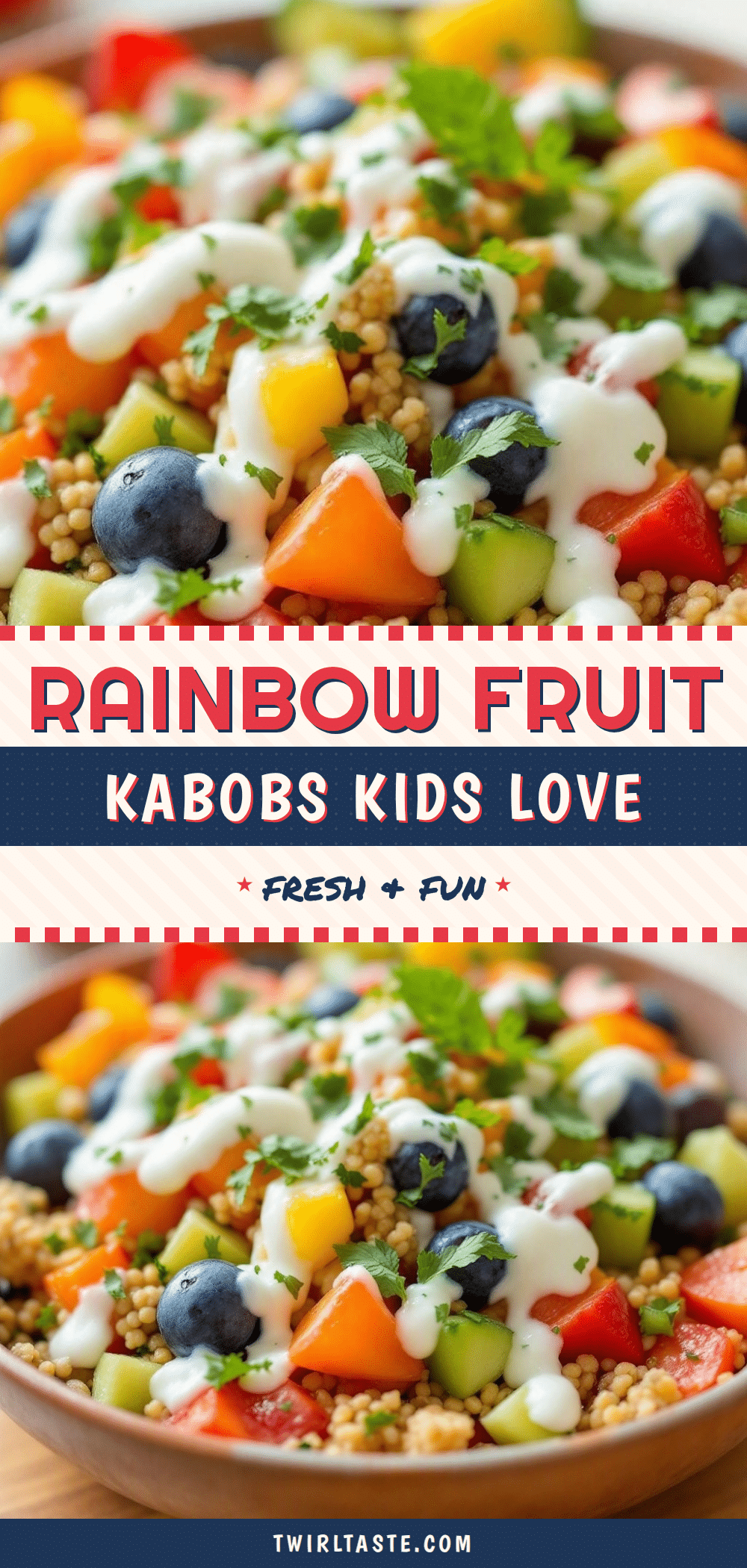
Easy Rainbow Fruit Kabobs: Best After-School Snack
These colorful fruit kabobs are the perfect after-school snack that’s healthy, fun, and ready in under 15 minutes. A simple way to get kids excited about eating fruit.
- Prep Time: 15 minutes
- Cook Time: 0 minutes
- Total Time: 15 minutes
- Yield: 8-10 kabobs
- Category: Snack
- Cuisine: American
Ingredients
- Strawberries (fresh, hulled and halved or quartered if large)
- Oranges or Mandarins (peeled and segmented)
- Pineapple (fresh or frozen, cut into 1-inch chunks)
- Green Grapes (seedless)
- Blueberries (fresh)
- Purple Grapes or Blackberries (for the purple/violet layer)
- Optional: Kiwi (peeled and sliced into rounds or half-moons)
- Optional: Mango (cubed)
- Optional: Banana (sliced into rounds, brushed with lemon or lime juice to prevent browning)
- Optional: Melon (cantaloupe or honeydew, use a melon baller)
- Optional: Raspberries (delicate, thread last before serving)
Instructions
- Wash and dry all fruit thoroughly. Pat completely dry with paper towels to prevent sliding and sogginess.
- Prep your fruit: hull and halve or quarter strawberries; peel and segment oranges or mandarins; cut pineapple into 1-inch cubes; leave green grapes and blueberries whole; leave purple grapes whole or handle blackberries gently.
- Set up an assembly line with small bowls of prepped fruit in rainbow order: red (strawberries), orange (oranges), yellow (pineapple), green (grapes), blue (blueberries), purple (purple grapes).
- Thread the skewers: take a skewer and thread fruit in the chosen color order (e.g., red, orange, yellow, green, blue, purple). Leave about an inch of space at the bottom for holding. Don’t cram fruit too tightly.
- Repeat for all skewers until fruit is used up. You should get about 8 to 10 kabobs from a standard batch.
- Optional: Chill in the refrigerator for 15 minutes before serving to firm up the fruit and make it extra refreshing.
Notes
Pat fruit dry thoroughly to prevent sliding and sogginess. Cut fruit into uniform 1-inch pieces for a balanced look. Leave space between fruit pieces on skewers for easy eating. For kids, lay out fruit in rainbow order as a template. Avoid very ripe bananas unless serving immediately. For browning-prone fruits like apples or bananas, brush with lemon or lime juice. Store in an airtight container with a paper towel at the bottom for up to 24 hours. For a fun variation, serve with yogurt dip or melted dark chocolate.
Nutrition
- Serving Size: 1 kabob (about 1 cup
- Calories: 80100
- Sugar: 1520
- Sodium: 5
- Fat: 0.5
- Carbohydrates: 2025
- Fiber: 35
- Protein: 12
Keywords: rainbow fruit kabobs, fruit skewers, after-school snack, healthy snack, kid-friendly snack, easy fruit recipe, no-cook snack