Love this? Save it for later!
Share the inspiration with your friends
I had been looking for a weeknight salmon recipe that actually delivered on both speed and flavor—without turning the kitchen into a disaster zone. For a while, I just accepted that quick salmon dinners meant dry edges, bland fillets, or a sink full of greasy pans. You know the drill. You come home tired, you want something healthy, and you end up with a piece of fish that tastes like obligation.
This garlic butter baked salmon with lemon changed all of that for me. It wasn’t some eureka moment in a test kitchen. It was a Tuesday. I had a salmon fillet thawing on the counter, a lemon rolling around in the fruit bowl, and garlic that was starting to sprout. I needed dinner in twenty minutes, and I needed it to be good enough that I wouldn’t reach for takeout an hour later. So I threw together what felt right—butter, garlic, lemon, a little salt—and crossed my fingers.
The first bite was quiet. Not dramatic. Just quietly satisfying in the way that simple food done right always is. The butter kept the salmon tender, the garlic infused every flake, and the lemon cut through the richness without making everything taste sour. It was the kind of dinner that makes you wonder why you ever overcomplicated fish in the first place. I’ve made it at least twice a month ever since, and honestly, it’s the only salmon recipe I trust when I’m short on time and patience.
Why You’ll Love This Recipe
This isn’t just another salmon recipe floating around the internet. I’ve tested this one more times than I care to count—different oven temperatures, different butter amounts, different lemon placements. What I’m sharing today is the version that worked every single time, no matter what kind of salmon I used or how distracted I was while cooking.
- Quick & Easy: From start to finish, this takes 20 minutes. That’s not a stretch goal. That’s the actual time, including prep. You can have this on the table faster than you can order delivery and wait for it to arrive.
- Simple Ingredients: You need salmon, butter, garlic, lemon, salt, pepper, and maybe some parsley if you’re feeling fancy. That’s it. No trips to specialty stores, no ingredient you’ll use once and forget about.
- Perfect for Busy Weeknights: This is the dinner you make when you want something healthy but don’t have the energy for a production. It works for a quiet dinner alone or for impressing guests without breaking a sweat.
- Crowd-Pleaser: I’ve served this to people who claimed they didn’t like salmon. They ate seconds. The garlic butter does something magical—it makes the fish approachable even for picky eaters.
- Unbelievably Delicious: The texture is what gets me every time. The butter keeps the salmon incredibly moist, the garlic gets fragrant and slightly sweet as it roasts, and the lemon brightens everything up. It’s comfort food that happens to be good for you.
What makes this recipe different from all the other baked salmon recipes out there? It’s the ratio. Most recipes drown the fish in butter or skimp on the garlic. This one hits the sweet spot—enough butter to keep things tender, enough garlic to taste it in every bite, and lemon that balances rather than overwhelms. It’s the version I’d serve to a chef, and the version I’d make for myself on a Tuesday night when I just want something good to eat.
What Ingredients You Will Need
This recipe uses simple, wholesome ingredients to deliver bold flavor and satisfying texture without the fuss. Most of these are pantry staples, which is exactly what you want when you’re staring down a busy weeknight.
- Salmon Fillets (4 fillets, about 6 ounces each): Look for fillets that are similar in thickness so they cook evenly. I prefer center-cut fillets because they’re the meatiest part of the fish. Skin-on or skinless both work here—I usually go skin-on because it helps hold the fillet together and adds a little extra flavor, but you can absolutely use skinless if that’s what you have.
- Unsalted Butter (4 tablespoons, softened): This is the backbone of the recipe. Unsalted butter lets you control the salt level, which matters because salmon can go from perfectly seasoned to too salty very quickly. Let it soften at room temperature so it spreads easily over the fish. I’ve tested this with salted butter in a pinch—just reduce the added salt by half.
- Fresh Garlic (4 cloves, minced): Please don’t use the jarred stuff here. Fresh garlic makes a real difference. When it roasts in the butter, it becomes fragrant and mellow, almost sweet. Minced garlic from a jar tends to burn or taste metallic. Take the extra thirty seconds to mince fresh cloves—your dinner will thank you.
- Fresh Lemon (1 large lemon): You’ll use both the zest and the juice. The zest adds bright citrus flavor without the acidity that can overwhelm the fish, while the juice adds just enough tang to cut through the richness of the butter. Roll the lemon on the counter before zesting and juicing—it releases more liquid.
- Salt (1 teaspoon, preferably kosher): I use Diamond Crystal kosher salt because it’s less salty by volume than table salt, which gives me more control. If you’re using table salt, start with ½ teaspoon and taste from there.
- Black Pepper (½ teaspoon, freshly ground): Freshly ground pepper has more flavor than pre-ground. It’s a small detail that makes a difference.
- Fresh Parsley (2 tablespoons, chopped, optional): This is for garnish, but honestly, it adds a nice freshness that complements the lemon. If you don’t have it, the recipe still works beautifully.
- Red Pepper Flakes (¼ teaspoon, optional): If you like a little heat, this is a nice addition. It’s completely optional, but I love the subtle warmth it adds.
Equipment Needed
You don’t need much for this recipe, which is part of why I love it. Here’s what you’ll need:
- Baking Sheet or Baking Dish: A rimmed baking sheet works perfectly. I use a half-sheet pan because it gives the fillets room to breathe. If you’re using a baking dish, make sure it’s large enough that the fillets aren’t crowded—crowding leads to steaming instead of baking.
- Parchment Paper or Aluminum Foil: Lining your pan makes cleanup infinitely easier. Parchment is my preference because nothing sticks to it, but foil works great too. If you use foil, give it a quick spray of nonstick cooking spray.
- Small Bowl: For mixing the garlic butter. Any small bowl will do.
- Microplane or Zester: For zesting the lemon. A fine grater works too, just be careful not to get the white pith, which is bitter.
- Chef’s Knife and Cutting Board: For mincing the garlic and chopping the parsley. A sharp knife makes both tasks much easier.
- Instant-Read Thermometer (optional but recommended): Salmon is done at 125°F to 130°F in the thickest part. A thermometer takes the guesswork out of it. I’ve overcooked plenty of salmon before I started using one—trust me, it’s worth the investment.
Preparation Method
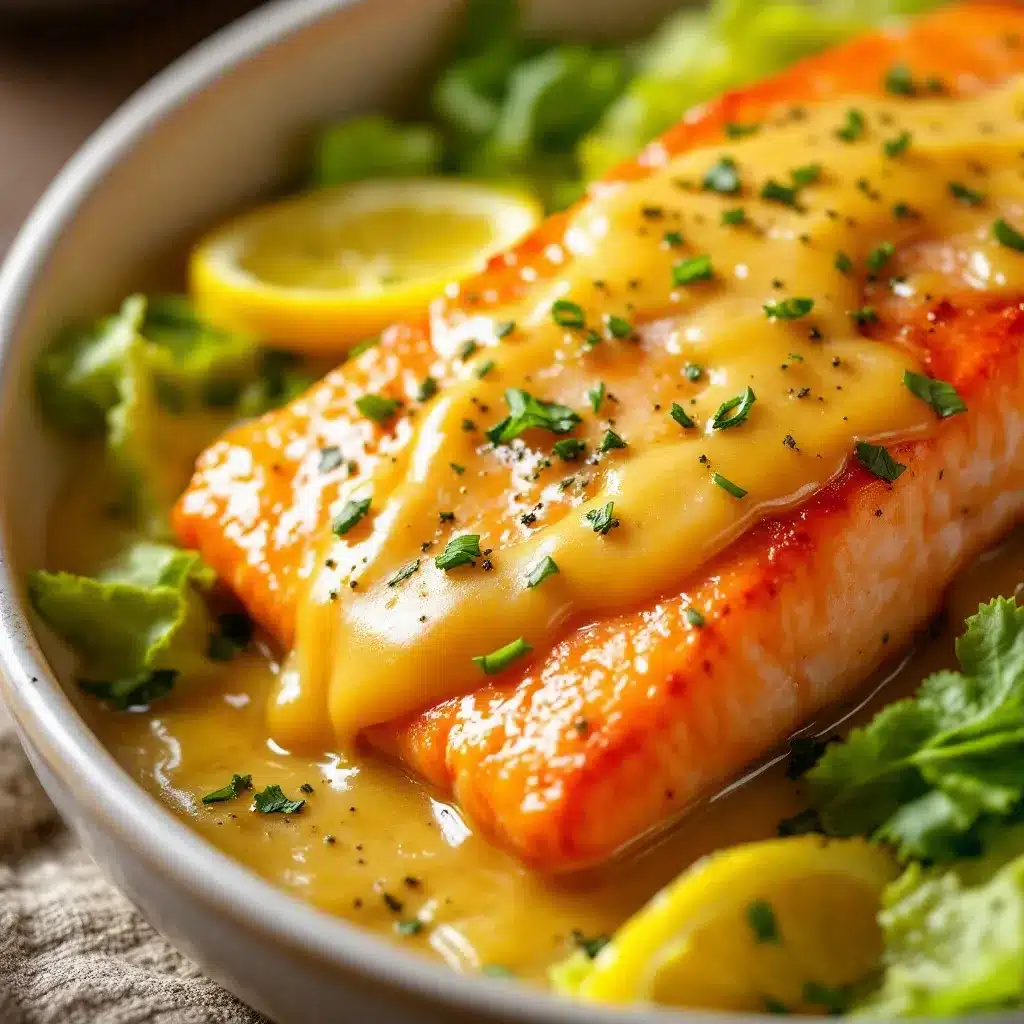
This comes together quickly, so I recommend reading through the steps once before you start. The actual hands-on time is about five minutes—the oven does most of the work.
- Preheat your oven to 400°F (200°C). Give it a full 15 minutes to come to temperature. An oven that isn’t hot enough will steam the salmon instead of roasting it, and you won’t get that nice tender texture. Line a rimmed baking sheet with parchment paper or aluminum foil.
- Prepare the garlic butter. In a small bowl, combine 4 tablespoons of softened unsalted butter, 4 minced garlic cloves, the zest of 1 lemon, 1 teaspoon of kosher salt, and ½ teaspoon of freshly ground black pepper. If you’re using red pepper flakes, add them now. Mix everything together with a fork until it’s well combined. The butter should be spreadable but not melted—if it’s too soft, pop it in the fridge for a few minutes.
- Prepare the salmon. Pat your 4 salmon fillets dry with paper towels. This is important—excess moisture prevents the butter from sticking and can make the salmon steam instead of roast. Place the fillets on the prepared baking sheet, skin-side down if they have skin. Leave at least an inch of space between each fillet so they cook evenly.
- Spread the garlic butter. Divide the garlic butter evenly among the fillets, about 1 tablespoon per fillet. Use the back of a spoon or a small offset spatula to spread it in an even layer over the top of each fillet. Don’t worry if some butter drips down the sides—that’s just extra flavor that will baste the fish as it cooks.
- Add the lemon. Cut the zested lemon in half. Squeeze the juice from one half evenly over the fillets. Slice the remaining half into thin rounds and place a slice or two on top of each fillet. The lemon slices will roast and soften, adding more flavor as they cook.
- Bake the salmon. Place the baking sheet in the preheated oven and bake for 12 to 15 minutes, depending on the thickness of your fillets. For fillets that are about 1 inch thick, start checking at 12 minutes. The salmon is done when it flakes easily with a fork and the internal temperature reaches 125°F to 130°F in the thickest part. The butter should be bubbling and the garlic should be fragrant.
- Rest and serve. Remove the salmon from the oven and let it rest on the baking sheet for 2 to 3 minutes. This allows the juices to redistribute throughout the fish. Sprinkle with fresh chopped parsley if you’re using it, and serve immediately with extra lemon wedges on the side.
Cooking Tips & Techniques
I’ve made this recipe more times than I can count, and I’ve learned a few things along the way. Here are the tips that make the biggest difference:
Don’t skip drying the salmon. This is the most common mistake I see. If your salmon is wet, the butter won’t adhere properly, and you’ll end up with a greasy puddle instead of a flavorful coating. Pat those fillets dry like you mean it.
Let the butter soften naturally. I know the microwave is tempting, but melted butter won’t spread evenly over the salmon. It will just run off into the pan. Take the butter out of the fridge 30 minutes before you start cooking, or cut it into small cubes to speed up the softening process.
Watch the garlic. Garlic burns quickly at 400°F. If your garlic is minced very fine, it might brown faster than you’d like. That’s why I recommend mincing it medium-fine—not too coarse, not too fine. If you see the garlic starting to darken too much, you can tent the salmon loosely with foil for the last few minutes of cooking.
Use an instant-read thermometer. I cannot stress this enough. Salmon goes from perfectly cooked to dry and overcooked in about 60 seconds. A thermometer takes the guesswork out of it. Insert it into the thickest part of the fillet, and pull the salmon at 125°F for medium-rare or 130°F for medium. It will continue to cook slightly as it rests.
If your fillets are different thicknesses, cut the thinner ones into smaller portions so they cook at the same rate as the thicker ones. Or, add the thinner fillets to the pan a few minutes after the thicker ones. Uneven cooking is the enemy of a good salmon dinner.
Variations & Adaptations
This recipe is flexible, and I’ve tried several variations over the years. Here are my favorites:
Herb Garlic Butter: Add 1 tablespoon of chopped fresh dill or thyme to the garlic butter mixture. Dill pairs beautifully with salmon and lemon. I make this version when I want something that feels a little more elegant, and it’s perfect for spring dinners.
Spicy Garlic Butter: Increase the red pepper flakes to ½ teaspoon, or add a minced fresno chili along with the garlic. The heat cuts through the richness of the butter and adds a nice kick. My husband loves this version, and it’s great served with a crisp green salad to balance the heat.
Parmesan Crust: After spreading the garlic butter, sprinkle 2 tablespoons of grated Parmesan cheese over each fillet. The cheese forms a golden, crispy crust as it bakes. This is the version I make when I want something indulgent. Just keep an eye on it—Parmesan can burn quickly at 400°F.
Maple Garlic Glaze: Swap the lemon for 2 tablespoons of maple syrup mixed into the garlic butter. The sweetness caramelizes beautifully and pairs surprisingly well with the savory garlic. This is a great option if you’re serving the salmon to kids who might find the lemon too tangy.
Lemon Pepper Variation: Skip the lemon zest and juice, and add 1 teaspoon of lemon pepper seasoning to the butter instead. It’s a shortcut that actually works well, and it’s perfect for nights when you don’t have fresh lemons on hand.
Serving & Storage Suggestions
This salmon is best served fresh out of the oven, but it’s versatile enough to work in a variety of settings.
Serving Temperature: Serve the salmon hot, right after it rests. The butter should still be warm and glossy, and the lemon slices should be soft and caramelized. If you let it sit too long, the butter will solidify and the texture won’t be as nice.
What to Serve With It: This salmon pairs beautifully with simple sides. I love it with roasted asparagus or green beans, a side of rice or quinoa, or a crisp green salad with a light vinaigrette. For a heartier meal, serve it alongside creamy mashed potatoes or roasted baby potatoes. If you’re looking for another quick weeknight option, this salmon is also delicious served over a bed of creamy orzo—the garlic butter sauce mixes right in.
Storage: Leftover salmon keeps in an airtight container in the refrigerator for up to 3 days. The texture won’t be quite as good as fresh, but it’s still delicious. I often make extra on purpose so I can use the leftovers in salads or flaked over rice bowls the next day.
Reheating: The best way to reheat salmon is in a low oven. Place the fillets on a baking sheet and warm them at 275°F for about 10 minutes. You can also reheat them in a skillet over medium-low heat with a splash of water or lemon juice to add moisture. Avoid the microwave if you can—it tends to dry out the fish and make it rubbery.
How Flavors Develop: The garlic butter flavor actually mellows and becomes more integrated after a day in the fridge. Cold leftover salmon is fantastic flaked over a salad with some fresh greens, cherry tomatoes, and a simple lemon vinaigrette. It’s a completely different dish, but just as good.
Nutritional Information & Benefits
This recipe is as good for you as it is delicious. Here’s a rough estimate per serving (one fillet with garlic butter):
- Calories: Approximately 380-420
- Protein: 34-38 grams
- Fat: 24-28 grams (mostly healthy fats from salmon and butter)
- Carbohydrates: 2-4 grams
- Fiber: 0 grams
- Omega-3 Fatty Acids: High (salmon is one of the best sources)
Health Benefits: Salmon is packed with omega-3 fatty acids, which are essential for heart and brain health. It’s also an excellent source of high-quality protein, B vitamins, and selenium. The garlic in this recipe adds anti-inflammatory benefits, and the lemon provides a dose of vitamin C. This is a meal that supports your health without feeling like a sacrifice.
Dietary Considerations: This recipe is naturally gluten-free, low-carb, and keto-friendly. If you’re dairy-free, you can substitute the butter with a high-quality plant-based butter or olive oil—just keep in mind that the flavor and texture will be slightly different. The recipe is also suitable for paleo diets if you use ghee instead of butter.
Allergens: This recipe contains fish (salmon) and dairy (butter). If you’re serving someone with a dairy allergy, the olive oil substitution works well.
Conclusion
This garlic butter baked salmon with lemon has become my go-to for a reason. It’s fast enough for a busy Tuesday, impressive enough for company, and simple enough that you don’t need to think too hard about it. The butter keeps the salmon tender, the garlic adds depth, and the lemon brightens everything up without making it taste like a lemon bomb. It’s the kind of recipe that makes you feel like you’ve got dinner handled, even on the days when you don’t have much left to give.
I hope you give this one a try, and I hope it becomes your go-to too. Feel free to play around with the variations—add herbs, adjust the garlic, swap in different citrus. Cooking should be flexible, and this recipe is forgiving enough to handle your tweaks. If you make it, I’d love to hear how it turned out. Drop a comment below and let me know what you served with it, or tag me in your photos so I can see your beautiful salmon dinner.
Happy cooking, friends. You’ve got this.
Frequently Asked Questions
Can I use frozen salmon for this recipe?
Yes, but you’ll need to thaw it completely first. The best way is to transfer the frozen fillets to the refrigerator the night before. If you’re in a hurry, you can thaw them in a bowl of cold water for about 30 minutes, changing the water halfway through. Pat the thawed fillets very dry before adding the garlic butter—frozen salmon tends to hold more moisture, and you want to get as much of that out as possible.
How do I know when the salmon is done without a thermometer?
If you don’t have an instant-read thermometer, look for visual cues. The salmon should be opaque all the way through, and it should flake easily when you gently press it with a fork. The butter should be bubbling, and the garlic should be fragrant but not burned. Start checking at the 12-minute mark, and remember that the salmon will continue to cook slightly after you take it out of the oven.
Can I make this recipe with other types of fish?
Absolutely. This garlic butter works beautifully with any firm, flaky fish. Try it with cod, halibut, sea bass, or even thick white fish like haddock. The cooking time will vary depending on the thickness of the fillets—thicker fish like halibut might need a few extra minutes, while thinner fillets like trout will cook faster. Use the same temperature and check for flakiness.
What if I don’t have fresh garlic?
Fresh garlic really is best here, but if you’re in a pinch, you can use 1 teaspoon of garlic powder instead of the 4 fresh cloves. It won’t have quite the same depth of flavor, and it won’t create that fragrant roasted garlic taste, but it will still be good. Just mix the garlic powder directly into the softened butter along with the other seasonings.
Can I double this recipe for a crowd?
Yes, but don’t crowd the pan. Use two baking sheets if you’re making more than 4 fillets, and rotate the pans halfway through cooking. Crowding the pan will cause the salmon to steam instead of roast, and you won’t get that nice tender texture. If you’re using two pans, swap their positions in the oven at the 7-minute mark to ensure even cooking.
Pin This Recipe!
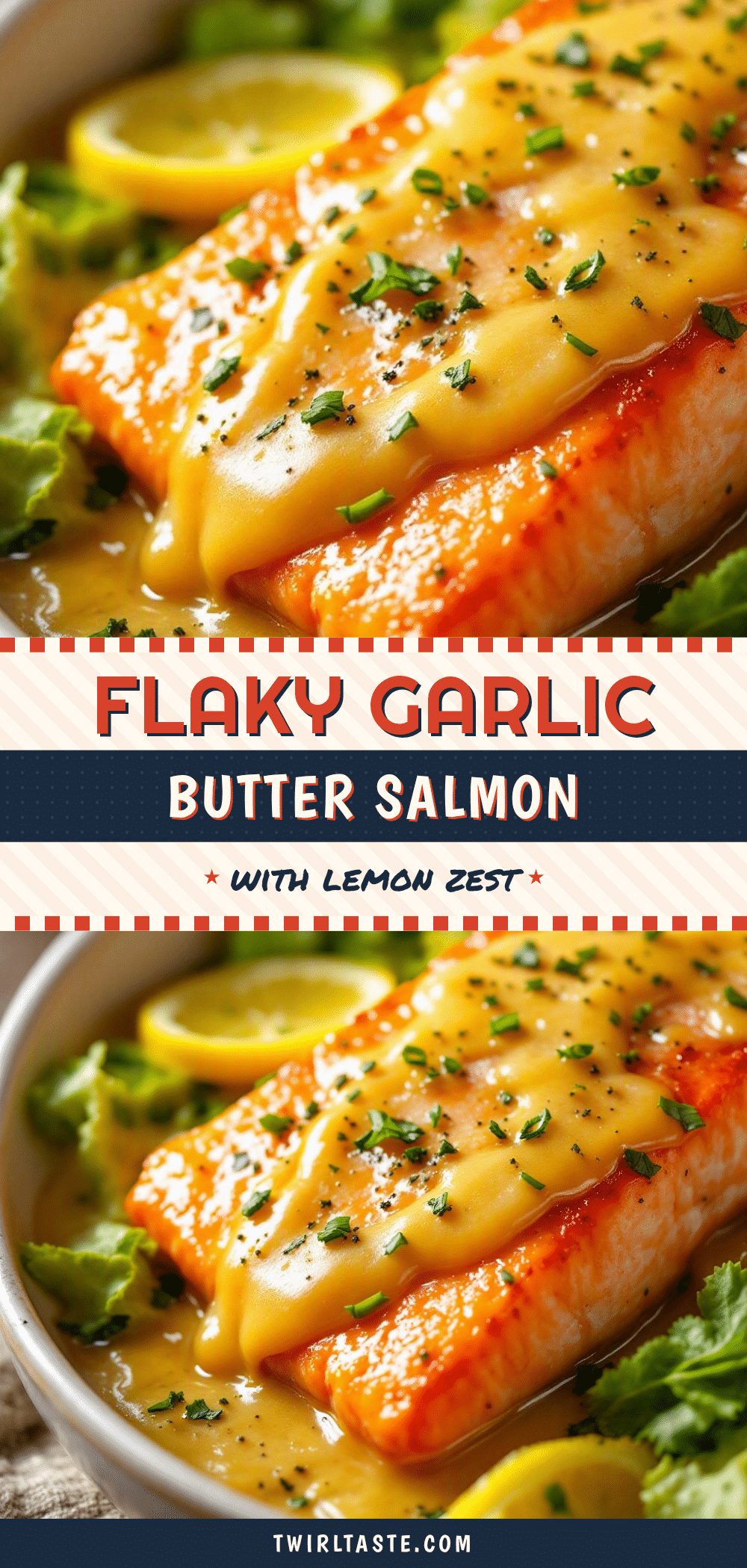
Best Garlic Butter Baked Salmon with Lemon – Easy 20-Minute Dinner

This garlic butter baked salmon with lemon is a quick, easy, and delicious weeknight dinner that comes together in just 20 minutes. The butter keeps the salmon tender, the garlic infuses every flake, and the lemon brightens everything up without overwhelming the fish.
- Prep Time: 5 minutes
- Cook Time: 15 minutes
- Total Time: 20 minutes
- Yield: 4 servings 1x
- Category: Main Course
- Cuisine: American
Ingredients
- 4 salmon fillets (about 6 ounces each)
- 4 tablespoons unsalted butter, softened
- 4 cloves garlic, minced
- 1 large lemon (zest and juice)
- 1 teaspoon kosher salt
- ½ teaspoon freshly ground black pepper
- 2 tablespoons fresh parsley, chopped (optional)
- ¼ teaspoon red pepper flakes (optional)
Instructions
- Preheat your oven to 400°F (200°C). Line a rimmed baking sheet with parchment paper or aluminum foil.
- In a small bowl, combine 4 tablespoons of softened unsalted butter, 4 minced garlic cloves, the zest of 1 lemon, 1 teaspoon of kosher salt, and ½ teaspoon of freshly ground black pepper. If using red pepper flakes, add them now. Mix until well combined.
- Pat the 4 salmon fillets dry with paper towels. Place them on the prepared baking sheet, skin-side down if they have skin, leaving at least an inch of space between each fillet.
- Divide the garlic butter evenly among the fillets (about 1 tablespoon per fillet) and spread it in an even layer over the top of each fillet.
- Cut the zested lemon in half. Squeeze the juice from one half evenly over the fillets. Slice the remaining half into thin rounds and place a slice or two on top of each fillet.
- Bake for 12 to 15 minutes, depending on the thickness of your fillets. The salmon is done when it flakes easily with a fork and the internal temperature reaches 125°F to 130°F in the thickest part.
- Remove the salmon from the oven and let it rest on the baking sheet for 2 to 3 minutes. Sprinkle with fresh chopped parsley if using, and serve immediately with extra lemon wedges on the side.
Notes
Don’t skip drying the salmon; pat fillets dry so the butter adheres. Let butter soften naturally for even spreading. Watch the garlic to prevent burning; if it darkens too much, tent with foil. Use an instant-read thermometer for perfect doneness (125°F for medium-rare, 130°F for medium). If fillets are different thicknesses, cut thinner ones into smaller portions or add them later.
Nutrition
- Serving Size: 1 fillet with garlic
- Calories: 400
- Sugar: 1
- Sodium: 600
- Fat: 26
- Saturated Fat: 10
- Carbohydrates: 3
- Protein: 36
Keywords: garlic butter salmon, baked salmon, lemon salmon, easy salmon recipe, weeknight dinner, healthy dinner, 20-minute meal