Love this? Save it for later!
Share the inspiration with your friends
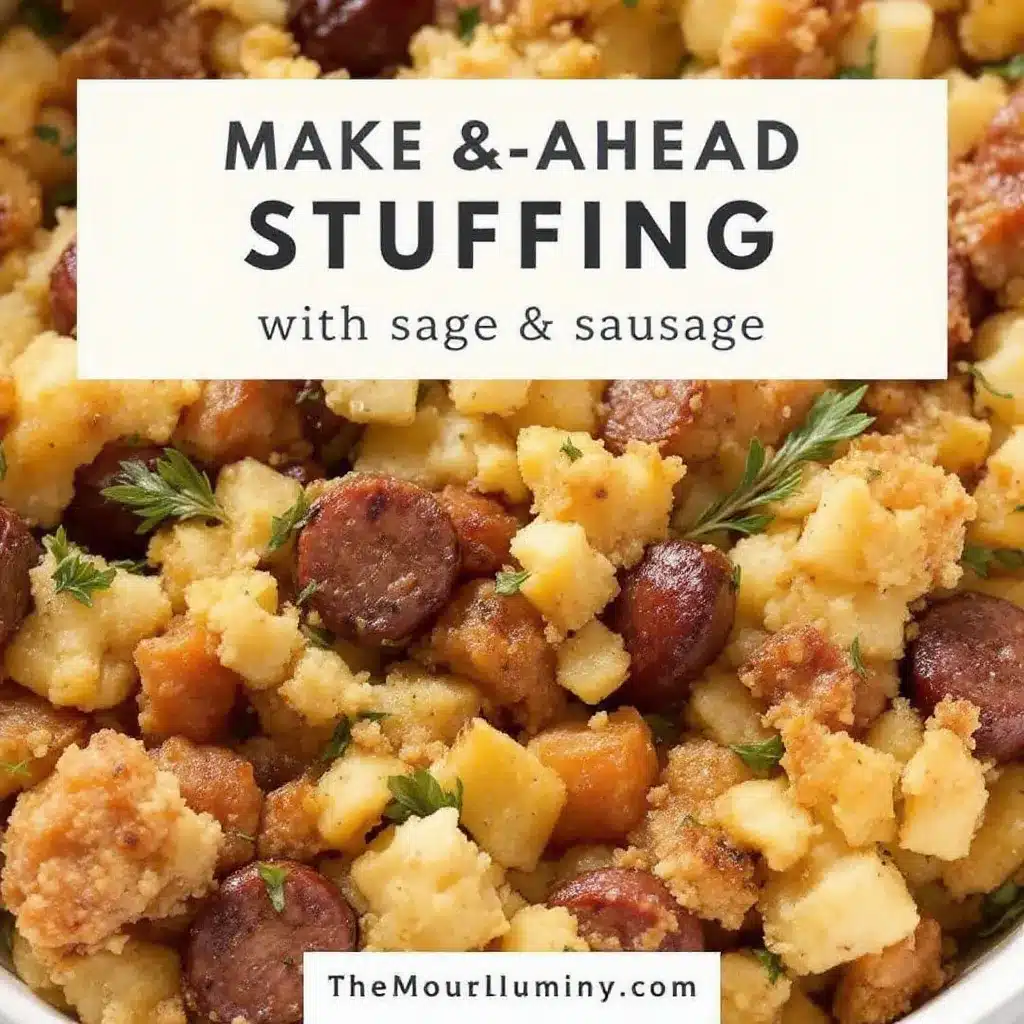
My husband asked for sourdough stuffing with sage and sausage three days in a row without being prompted. I stood in the kitchen holding the wooden spoon, staring at the empty baking dish, and honestly, I wasn’t sure if I should be flattered or slightly concerned. It wasn’t just that he liked it; it was the specific way he would scoop out the crispy, golden-brown edges and ignore the softer center pieces. He told me that the tang from the day-old bread cut through the richness of the Italian sausage better than any standard bread cube he had ever tasted.
I usually dread the repetitive meal cycle, especially when it involves heavy carbs. But this particular batch of make-ahead sourdough stuffing with sage and sausage had changed the dynamic of our week. The smell of brown butter and fresh sage filling the house seemed to calm the usual post-dinner chaos. I watched him take a second helping, eyes closed, and realized that I had accidentally stumbled into a new family tradition. It wasn’t about perfection or presentation; it was about that specific savory depth that only comes from letting the flavors marry overnight.
Now, I make this dish almost every time I have leftover sourdough crusts or a stale loaf lying around. It saves time during the holidays and actually tastes better on the second day. You know how some recipes are just nice to have? This one is a “must-have” for anyone who loves bold flavors and zero stress. I keep the recipe simple because sometimes the best things in life don’t need a lot of fuss. It’s just good, honest food that brings everyone to the table.
Why You’ll Love This Recipe
This make-ahead sourdough stuffing with sage and sausage isn’t just another side dish; it’s the result of years of trial and error in my own kitchen. I’ve tested dozens of bread types, and I can tell you from experience that nothing beats the porous, tangy structure of sourdough for absorbing savory broths without turning into mush. It’s the kind of recipe that earns its keep by being reliable, delicious, and surprisingly easy to manage.
- Quick & Easy Prep: The heavy lifting is done the day before. You chop, sauté, and assemble in under an hour, leaving the rest to the overnight rest and final bake. This is perfect for busy weeknights or stressful holiday mornings.
- Simple Ingredients: You likely already have most of this in your pantry. We’re talking basic onions, celery, Italian sausage, and that essential sourdough bread. No fancy grocery trips needed.
- Perfect for Meal Prep: This dish is designed to be made ahead. It actually improves in flavor as it sits, making it ideal for potlucks, brunch, or prepping dinner in advance.
- Crowd-Pleaser: It gets rave reviews from kids and adults alike. The savory sausage and herb profile is comforting without being too heavy for light eaters.
- Unbelievably Delicious: The texture is next-level. You get the crunch of the top layer and the soft, infused interior. It’s comfort food reimagined—richer and more complex than standard stuffing.
What makes this version different is the sourdough factor. Standard white bread can get soggy, but sourdough holds its shape while soaking up every bit of the sage-infused broth. I’ve found that using a mix of butter and olive oil helps create that perfect crispy top layer that everyone fights over. It’s the kind of recipe that makes you close your eyes after the first bite. It’s not just good; it’s the kind of meal that makes a simple Tuesday feel special.
What Ingredients You Will Need
This recipe relies on high-quality, accessible ingredients to deliver bold flavor and satisfying texture without the fuss. The key is using stale bread, which acts like a sponge for the savory liquids. I prefer using hearty Italian sausage for its fennel and spice notes, which complement the earthy sage perfectly.
- Day-Old Sourdough Bread (1 loaf): Cut into 1-inch cubes. The bread must be stale or toasted to absorb liquid without disintegrating. I recommend using a sturdy, crusty sourdough from a local bakery for the best tang.
- Italian Sausage (1 lb): Mild or hot, depending on your preference. Remove from casings if necessary. I trust Johnsonville or local butcher quality for consistent seasoning.
- Unsalted Butter (1/2 cup): Provides richness and helps crisp the top. Use European-style butter if you want a deeper, nuttier flavor.
- Vegetable Oil (2 tbsp): Helps prevent the butter from burning during the initial sauté.
- Yellow Onion (1 large): Diced finely. Adds sweetness and body to the base.
- Celery Stalks (3-4): Diced. Essential for that classic stuffing crunch and savory depth.
- Fresh Sage (1/4 cup): Chopped. Fresh is non-negotiable here; dried sage lacks the aromatic punch.
- Fresh Thyme (2 tbsp): Leaves stripped from stems. Adds a floral, pine-like note.
- Chicken or Turkey Stock (4-5 cups): Low-sodium is best so you can control the saltiness. Warm it up before pouring.
- Large Eggs (2): Beaten. Acts as a binder to hold the stuffing together.
- Salt and Black Pepper: To taste. Always season at the end.
If you need a dairy-free option, you can swap the butter for olive oil or a plant-based alternative. For a gluten-free version, use certified gluten-free sourdough bread, though the texture may be slightly denser. I always taste the sausage before adding extra salt, as it can be quite salty on its own.
Equipment Needed
You don’t need fancy gear for this, just a few reliable tools. A large 12-inch skillet is essential for cooking the sausage and vegetables. I prefer cast iron because it distributes heat evenly, but stainless steel works fine too. A large mixing bowl (at least 6-quart capacity) is needed for combining the bread and liquids. A 9×13 inch baking dish is standard for baking the stuffing. I also recommend using a pastry brush for brushing the top with butter before baking. For maintenance, just wash your skillet immediately after use to keep it seasoned. If you’re on a budget, a basic non-stick skillet and a glass Pyrex dish work perfectly well.
Preparation Method
- Prepare the Bread (30 mins): Preheat your oven to 350°F (175°C). Cut the day-old sourdough loaf into 1-inch cubes. Spread them in a single layer on two large baking sheets. Bake for 10-15 minutes until dry and lightly toasted. This step is crucial for texture. Let them cool completely.
- Cook the Sausage (10 mins): Heat the vegetable oil in a large 12-inch skillet over medium-high heat. Add the Italian sausage, breaking it up with a wooden spoon. Cook until browned and no longer pink, about 6-8 minutes. Drain excess grease if there is a lot, but leave a little for flavor.
- Sauté the Vegetables (10 mins): Reduce heat to medium. Add the butter to the skillet with the sausage. Once melted, add the diced onion and celery. Sauté until softened and translucent, about 5 minutes. Stir in the fresh sage and thyme, cooking for another minute until fragrant. Remove from heat.
- Combine Dry Ingredients (5 mins): In your large mixing bowl, combine the toasted sourdough cubes, the sausage-vegetable mixture, and half of the stock. Toss gently to distribute the liquid. Let it sit for 5 minutes so the bread absorbs some moisture.
- Add Binders and Remaining Liquid (5 mins): Beat the eggs in a small bowl. Pour the beaten eggs and the remaining stock over the bread mixture. Gently fold everything together until evenly moistened. The mixture should look wet but not soupy. Taste a small piece of bread to check seasoning; add salt and pepper if needed.
- Transfer to Dish (2 mins): Pour the mixture into your greased 9×13 inch baking dish. Press down gently with a spatula to create an even layer. This helps it bake uniformly.
- Refrigerate (Overnight): Cover tightly with plastic wrap or foil. Refrigerate for at least 4 hours, or preferably overnight. This allows the flavors to meld and the bread to fully hydrate.
- Bake (45-60 mins): Remove the dish from the fridge 30 minutes before baking to take the chill off. Preheat oven to 375°F (190°C). Dot the top with small pats of butter. Bake uncovered for 30 minutes. Then, increase heat to 400°F (200°C) and bake for another 15-20 minutes until the top is golden brown and crispy.
- Rest and Serve (10 mins): Let the stuffing rest for 10 minutes before serving. This helps it set and makes it easier to scoop.
Cooking Tips & Techniques
The biggest mistake people make is using fresh bread. Fresh bread has too much moisture and will turn into a dense, gummy brick. Always use stale bread or toast it yourself. Another tip is to warm your stock before pouring it over the bread. Cold stock can shock the system and make the bread seize up, leading to uneven soaking. I also recommend not skipping the rest period after mixing. Letting the bread sit for 10 minutes ensures every cube is hydrated. If you find the top is browning too fast, loosely tent it with foil. For a crunchier top, broil for the last 2 minutes, but watch it like a hawk—it burns in seconds.
Variations & Adaptations
While the sage and sausage combo is classic, you can adapt this recipe to suit your tastes. For a vegetarian version, swap the sausage for sautéed mushrooms and walnuts. The mushrooms provide a meaty texture and umami flavor that works beautifully. If you prefer poultry, use ground turkey or chicken sausage for a lighter option. For a spicy kick, use hot Italian sausage and add a pinch of red pepper flakes to the vegetable mix. You can also add chopped apples or dried cranberries for a sweet and savory contrast, which pairs well with the tangy sourdough. I once tried adding chopped kale, and it added a nice earthy bite that I really enjoyed.
Serving & Storage Suggestions
Serve this stuffing warm, straight from the oven. It pairs wonderfully with roasted chicken, turkey, or even a simple grilled salmon. A side of crisp green salad with a vinaigrette cuts through the richness perfectly. For storage, let the leftovers cool completely. Transfer them to an airtight container and refrigerate for up to 4 days. To reheat, place portions in a baking dish, add a splash of stock to keep it moist, and cover with foil. Bake at 350°F for 20 minutes. For a crispier texture, remove the foil for the last 5 minutes. The flavors actually deepen after a day or two, making it great for lunch boxes or quick dinners.
Nutritional Information & Benefits
This make-ahead sourdough stuffing with sage and sausage is a hearty side dish. A typical serving contains approximately 350-400 calories, depending on the sausage fat content and butter used. Sourdough bread is easier to digest than regular wheat bread due to the fermentation process, which breaks down some of the gluten and phytic acid. The eggs provide protein, while the herbs offer antioxidants. It is not naturally gluten-free unless you use gluten-free bread. For those watching sodium, use low-sodium stock and mild sausage. I find that using a mix of lean turkey sausage can reduce the overall fat content without sacrificing flavor.
Conclusion
This recipe has become a staple in my kitchen for good reason. It’s flavorful, forgiving, and makes the holiday prep so much easier. I love that I can spend less time cooking and more time with my family. Try making it once, and you’ll see why my husband keeps asking for it. Customize it with your favorite herbs or meats to make it your own. I’d love to hear how it turns out for you—leave a comment below with your variations or questions. Happy cooking, and enjoy every bite!
FAQs
Can I use fresh sourdough bread instead of stale?
It’s not recommended. Fresh bread has too much moisture and will result in a soggy, dense stuffing. If you only have fresh bread, toast the cubes in the oven at 350°F for 10-15 minutes until they are dry and firm.
How far in advance can I make this stuffing?
You can assemble this stuffing up to 24 hours in advance. In fact, making it the night before allows the flavors to meld and the bread to fully absorb the broth, which often improves the taste. Just keep it covered in the fridge until you’re ready to bake.
Can I freeze this stuffing?
Yes, you can freeze the assembled but unbaked stuffing. Wrap it tightly in plastic wrap and foil, then freeze for up to 3 months. Thaw it in the refrigerator overnight before baking. Note that the texture may be slightly softer after freezing, but it will still taste delicious.
What type of sausage works best?
Italian sausage is the traditional choice because of its fennel and herb seasoning. You can use mild or hot, depending on your preference. Ground pork with added sage and fennel seeds is a good substitute if you can’t find pre-seasoned sausage.
How do I know when the stuffing is done?
The stuffing is done when the top is golden brown and crispy, and the center is hot (165°F). Insert a knife into the center; if it comes out clean and the bread is tender, it’s ready. If the top is browning too quickly, cover it with foil.
Related Recipes
If you enjoy the savory, herbaceous flavors in this stuffing, you might also appreciate the earthy notes in our easy cozy maple butternut squash soup with crispy sage. The combination of roasted squash and fried sage leaves offers a similar comforting profile. For another game-day favorite that features sausage, check out our easy smoked sausage tailgate skewers, which are perfect for sharing before the main meal.
Pin This Recipe!
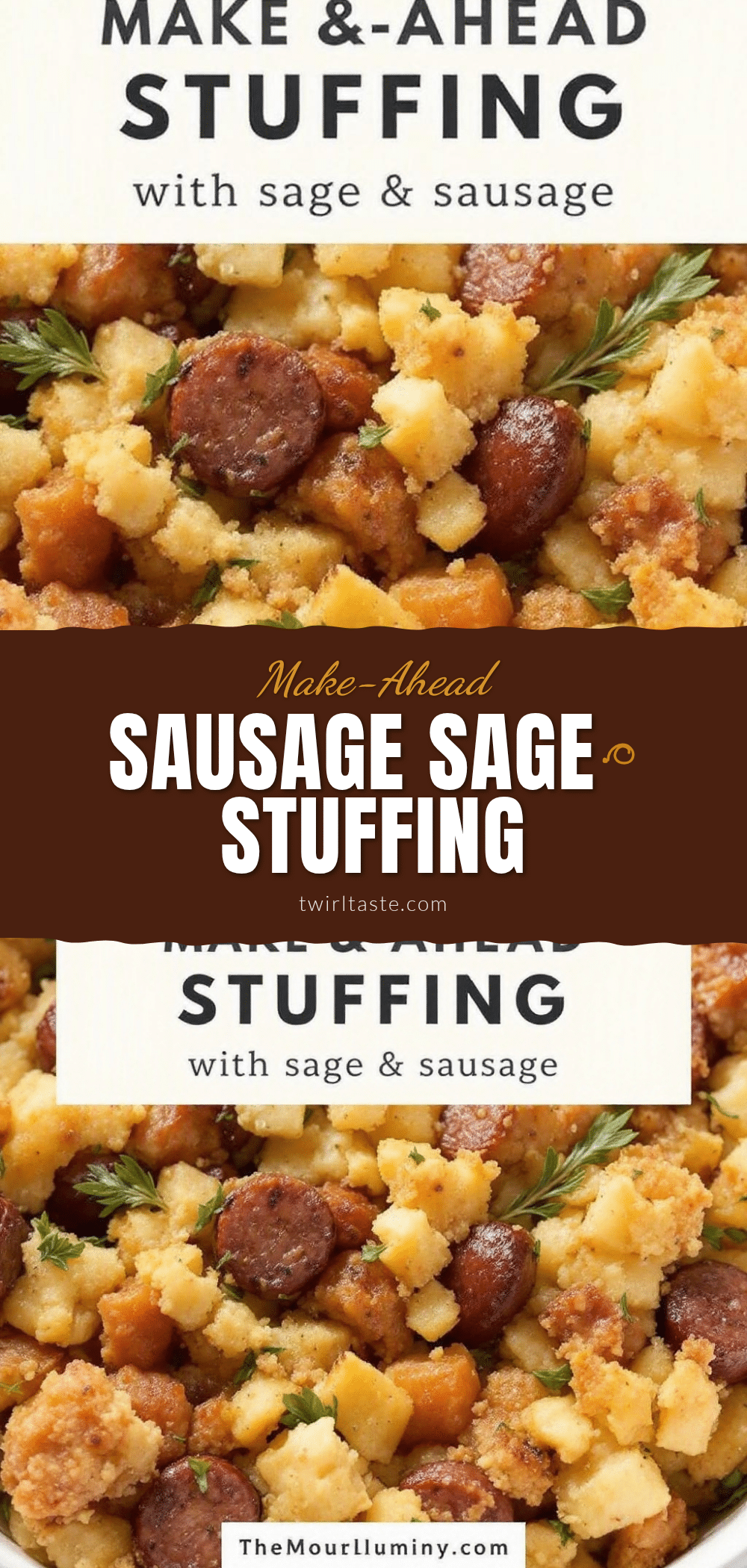
Make-Ahead Sourdough Stuffing with Sage and Sausage

A savory and tangy stuffing made with day-old sourdough bread, Italian sausage, and fresh herbs. This make-ahead dish improves in flavor overnight and features a crispy, golden-brown top layer.
- Prep Time: 45 minutes
- Cook Time: 60 minutes
- Total Time: 105 minutes
- Yield: 8 servings 1x
- Category: Side Dish
- Cuisine: American
Ingredients
- 1 loaf day-old sourdough bread, cut into 1-inch cubes
- 1 lb Italian sausage (mild or hot), removed from casings
- 1/2 cup unsalted butter
- 2 tbsp vegetable oil
- 1 large yellow onion, diced
- 3–4 celery stalks, diced
- 1/4 cup fresh sage, chopped
- 2 tbsp fresh thyme, leaves stripped
- 4–5 cups chicken or turkey stock, low-sodium and warm
- 2 large eggs, beaten
- Salt and black pepper to taste
Instructions
- Preheat oven to 350°F (175°C). Spread sourdough cubes on baking sheets and bake for 10-15 minutes until dry and lightly toasted. Let cool completely.
- Heat vegetable oil in a large 12-inch skillet over medium-high heat. Add sausage and cook until browned, about 6-8 minutes. Drain excess grease if necessary.
- Reduce heat to medium. Add butter to the skillet. Once melted, add onion and celery; sauté until softened, about 5 minutes. Stir in sage and thyme for 1 minute until fragrant.
- In a large mixing bowl, combine toasted bread cubes, sausage mixture, and half of the stock. Toss gently and let sit for 5 minutes.
- Pour beaten eggs and remaining stock over the bread mixture. Fold gently until evenly moistened. Season with salt and pepper to taste.
- Transfer mixture to a greased 9×13 inch baking dish. Press down gently to create an even layer.
- Cover tightly and refrigerate for at least 4 hours or overnight.
- Remove from fridge 30 minutes before baking. Preheat oven to 375°F (190°C). Dot top with butter pats.
- Bake uncovered for 30 minutes. Increase heat to 400°F (200°C) and bake for another 15-20 minutes until top is golden brown and crispy.
- Let rest for 10 minutes before serving.
Notes
Use stale bread or toast fresh bread to ensure proper texture. Warm the stock before adding to prevent the bread from seizing. The stuffing improves in flavor when made ahead and refrigerated overnight. For a vegetarian version, substitute sausage with sautéed mushrooms and walnuts.
Nutrition
- Serving Size: 1 cup
- Calories: 375
- Sugar: 2
- Sodium: 650
- Fat: 22
- Saturated Fat: 9
- Carbohydrates: 30
- Fiber: 2
- Protein: 12
Keywords: sourdough stuffing, sage sausage, make-ahead recipe, holiday side dish, Thanksgiving stuffing, comfort food